
Hollywood’s Dark Side: A Look at Celebrity Crime
Dive into shocking celebrity crime cases. From O.J. to Diddy, explore Hollywood's dark side and the justice system.

Why Celebrity Crime Cases Continue to Captivate the Public
Celebrity crime cases are a fascinating intersection of fame, justice, and human nature. From O.J. Simpson’s infamous white Bronco chase through Los Angeles to Sean ‘Diddy’ Combs’ recent federal investigations, these cases reveal the stark reality that fame doesn’t grant immunity from the law.
Here are the most notable types of celebrity crime cases:
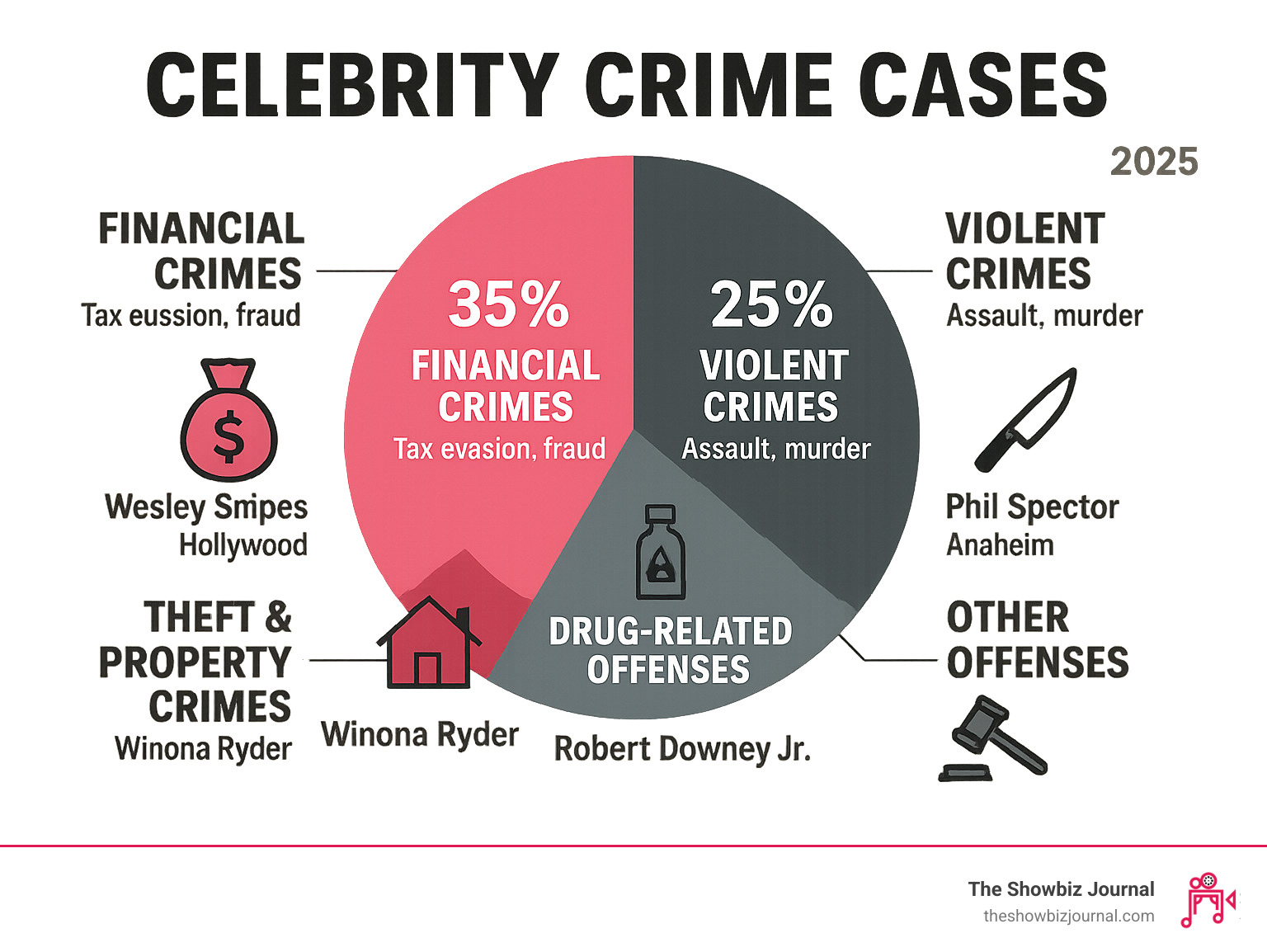
- Financial crimes – Tax evasion (Wesley Snipes), insider trading (Martha Stewart)
- Violent crimes – Murder convictions (Phil Spector), rape charges (Mike Tyson)
- Drug-related offenses – Possession and addiction issues (Robert Downey Jr.)
- Theft crimes – Shoplifting scandals (Winona Ryder)
- Domestic violence – Assault charges (Floyd Mayweather Jr.)
- Vehicular crimes – Manslaughter cases (Matthew Broderick)
The contrast between Hollywood’s glittering facade and its dark underbelly has never been more apparent. What makes these cases particularly compelling is how they unfold in our backyard. Many of the most notorious celebrity crimes have deep roots in Hollywood and Anaheim, from the Manson Family murders in the Hollywood Hills to Phil Spector’s conviction stemming from events at his Alhambra castle.
These stories serve as modern cautionary tales about power, wealth, and the consequences of believing you’re above the law. They remind us that behind the red carpets lies a world where celebrities face the same legal system as everyone else—though often with vastly different resources.
As Jonas Muthoni TSJ, founder of The Showbiz Journal, my experience tracking celebrity crime cases has shown me how these stories reflect broader questions about justice, privilege, and accountability in our society.
The Trial of the Century: When Fame Meets the Felony System
When celebrity status collides with criminal accusations, the resulting courtroom drama often becomes must-watch television. The most shocking celebrity crime cases have their roots right here in Los Angeles and Anaheim, turning our local courtrooms into stages for national spectacles that blur the line between entertainment and justice. These aren’t just legal proceedings—they’re cultural moments that reveal uncomfortable truths about fame and privilege.
The O.J. Simpson Case: A Los Angeles Saga
On June 17, 1994, millions watched live as O.J. Simpson led police on a slow-speed chase through Los Angeles freeways in a white Ford Bronco. The former NFL star was a suspect in the brutal murders of his ex-wife Nicole Brown Simpson and Ronald Goldman in Brentwood.
The “Trial of the Century” followed, with Simpson’s “Dream Team” of attorneys turning the downtown LA courthouse into a battleground. Prosecutors presented overwhelming forensic evidence, including DNA matches, but the defense masterfully challenged every piece, arguing contamination or planting by investigators.
Despite the evidence, the criminal jury delivered a shocking acquittal in October 1995, sparking intense debates about celebrity justice. The story didn’t end there. A 1997 civil jury found Simpson liable for the wrongful deaths, ordering him to pay $33.5 million in damages. This dual outcome highlighted how different burdens of proof can lead to different results. The case forever changed our perception of DNA evidence and launched the era of 24/7 cable news obsession with celebrity crime cases. Explore Hollywood’s True Crime History with The Showbiz Journal to dive deeper into how these events shaped our understanding of justice and media.
Phil Spector: The Music Legend’s Murder Conviction
Phil Spector created the legendary “Wall of Sound” that defined 1960s music. But on February 3, 2003, his Alhambra mansion—the “Pyrenees Castle”—became the scene of a tragedy. Actress Lana Clarkson was found dead in his foyer, shot in the mouth.
The prosecution painted Spector as a man with a history of threatening women with guns, arguing he murdered Clarkson in a fit of rage. The defense countered with a suicide theory. Forensic evidence was key: prosecutors pointed to bruises suggesting force, while defense experts argued blood spatter patterns were consistent with suicide.
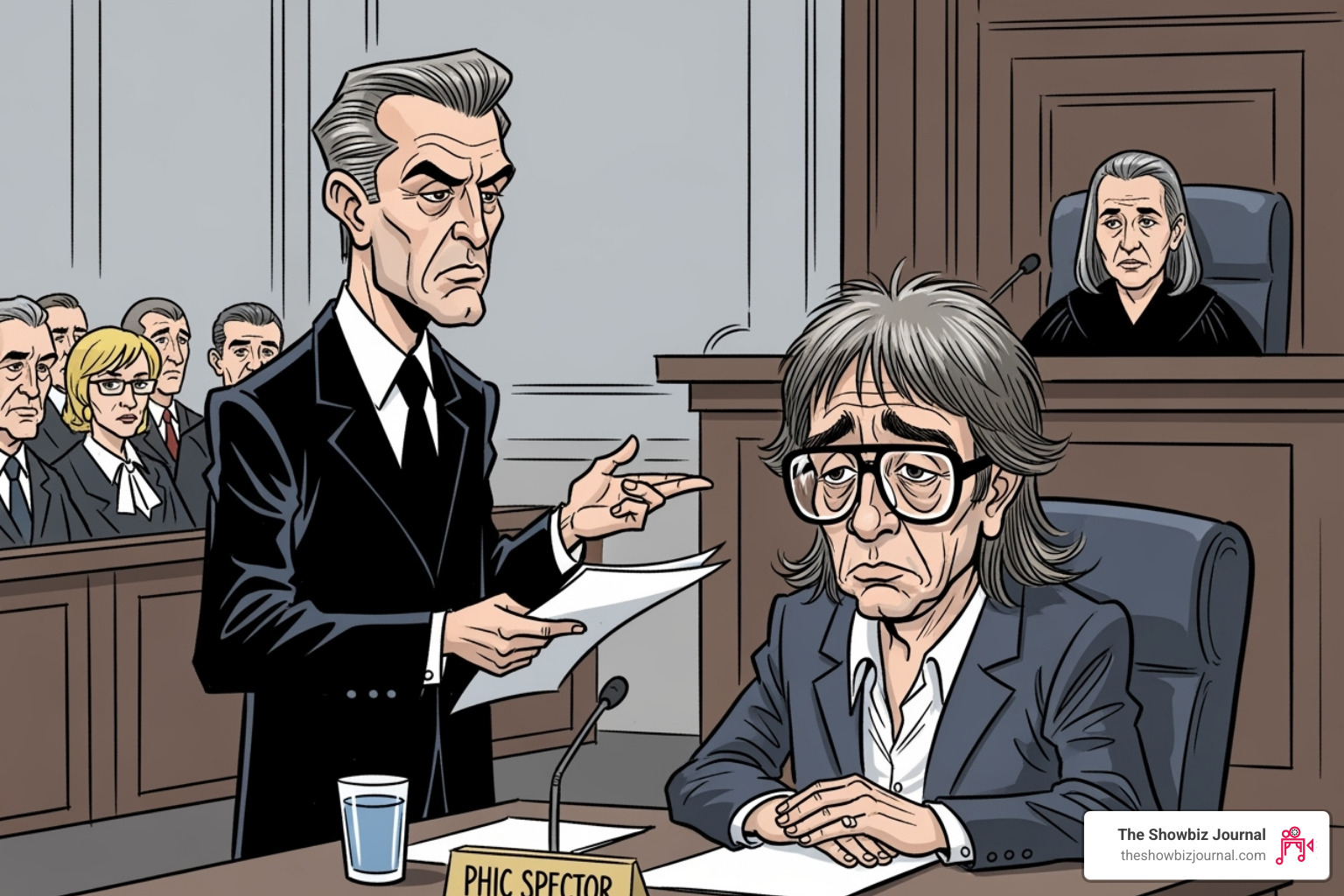
After a mistrial in 2007, Spector was convicted of second-degree murder in 2009 and sentenced to 19 years to life. He died in prison in 2021, his brilliant career forever overshadowed by this dark final chapter. The case proved that even legendary status can’t protect you from the consequences of your actions.
The Manson Family Murders: Hollywood’s End of Innocence
The summer of 1969 shattered Hollywood’s golden image. On August 9, Charles Manson’s followers invaded a home on Cielo Drive in the Hollywood Hills, brutally murdering actress Sharon Tate—eight months pregnant—and four others. The crime was an assault on everything Hollywood represented, marking the end of the 1960s’ idealistic spirit.
The initial investigation revealed shocking failures in crime scene management, with contaminated evidence and smudged fingerprints becoming textbook examples of what not to do. Despite the chaos, investigators eventually connected the Manson Family to the murders through fingerprint and ballistics evidence.
The cultural impact continues today, inspiring countless documentaries, books, and films that explore the dark side of the counterculture, as seen in how Movies still reference this pivotal moment. The murders raised questions about violence in entertainment and the exploitation of tragedy, reminding us that behind Hollywood’s glamorous facade lies a capacity for unimaginable darkness.
Not Above the Law? Examining Diverse Celebrity Crime Cases
When we think about celebrity crime cases, it’s tempting to imagine they’re all dramatic murder trials. But the reality is much more diverse. From tax troubles to addiction struggles, celebrities face the same legal challenges as everyone else—they just do it under the glaring spotlight of public attention, often right here in Hollywood and Anaheim.
Financial and White-Collar Crimes
Money doesn’t solve everything; sometimes it creates new problems. Action star Wesley Snipes learned this the hard way. Convicted in 2008 for failing to file federal tax returns, he served nearly three years in prison, a cautionary tale for the rich and famous. Similarly, lifestyle guru Martha Stewart was convicted of obstruction of justice in 2004 related to an insider trading case. She served five months in prison, proving no one is immune. These cases show the FBI takes white-collar crimes seriously, no matter who commits them. For more detailed insights into how these investigations unfold, you can check out Showbiz Journal’s Crime Coverage.
Violent Crimes and Controversial Outcomes
When celebrities are involved in violent crimes, public attention reaches a fever pitch, revealing uncomfortable truths about how wealth can influence legal outcomes.
Mike Tyson’s 1992 rape conviction remains one of sports’ most controversial cases. The boxing champion served about three years of a six-year sentence, a verdict that ended his prime fighting years and forever changed his public image.
In contrast, Matthew Broderick’s 1987 car crash in Northern Ireland killed two people. Initially facing vehicular manslaughter charges, his offense was reduced to “careless driving,” resulting in a mere $175 fine. The outcome sparked outrage over potential celebrity influence.
Floyd Mayweather Jr.’s multiple domestic violence cases also reveal a troubling pattern. In one controversial plea deal, a potential multi-year prison sentence was reduced to 90 days after his attorneys argued he needed to train for a fight. These cases underscore why experienced legal representation matters so much.
Theft and Drug-Related Offenses: A Look at Celebrity Crime Cases
Fame doesn’t protect anyone from personal struggles. Winona Ryder’s 2001 shoplifting arrest became an instant pop culture moment. The actress was caught stealing over $5,500 worth of merchandise from Saks Fifth Avenue in Beverly Hills. She was convicted of felony grand theft, receiving probation and community service. The case was bizarre: why would a wealthy actress shoplift? It highlighted how private struggles can lead to inexplicable public choices.

Robert Downey Jr.’s story offers hope. In the late 90s and early 2000s, he faced repeated drug charges and prison time, and his career was widely considered over. But his journey from the depths of addiction to becoming Iron Man proves that redemption is possible. His change from courthouse regular to Marvel superhero became one of entertainment’s greatest comeback stories, showing that while celebrity crime cases can destroy careers, they can also be the foundation for incredible personal growth.
The Modern Era of Celebrity Justice
The world of celebrity crime cases has transformed dramatically in recent years. Social media now amplifies every detail, federal investigations reach deeper than ever before, and our cultural understanding of accountability continues to shift. Here in Hollywood and Anaheim, we’re witnessing these changes as high-profile cases unfold in our backyard.
The Sean ‘Diddy’ Combs Case: A Federal Investigation Unfolds
Perhaps no recent celebrity crime case better illustrates this modern landscape than the ongoing saga of music mogul Sean ‘Diddy’ Combs. What started as civil lawsuits quickly escalated into something much bigger – a federal investigation that culminated in dramatic raids on his properties, including his Los Angeles mansion.
In 2025, a jury delivered a mixed verdict that shocked the entertainment world. While Combs was acquitted on the most serious charges of racketeering and sex trafficking, he was found guilty on two felony counts under the Mann Act – a century-old law that prohibits transporting people across state lines for prostitution.
The trial revealed disturbing details about the music industry’s dark underbelly. Witness testimony proved crucial, with his former girlfriend Cassie Ventura describing being forced to hide injuries and endure coercive situations. The prosecution presented evidence ranging from seized bottles of baby oil to alleged “freak-off” videos, though an alternate juror later questioned whether some evidence was more about character assassination than proving actual crimes.
What makes this case particularly fascinating is how federal agencies approached the investigation. The FBI’s involvement highlights how seriously authorities now take cases involving alleged crimes across state lines. Their meticulous approach – collecting evidence, interviewing witnesses, and coordinating with local law enforcement – shows the evolving nature of celebrity investigations.
The consequences for Diddy extend far beyond potential prison time. Prosecutors are seeking around four years, though he may serve less based on sentencing guidelines. More importantly, his once-untouchable reputation in the music industry has crumbled. The case demonstrates how quickly fame can turn to infamy in our interconnected world.
For more updates and analysis on how these cases affect public figures, explore More info about Celebrities.
The Impact of Media and Public Perception on Celebrity Crime Cases
Today’s celebrity crime cases unfold differently than those of previous decades. Social media transforms every legal proceeding into a public spectacle, while streaming documentaries dissect cases long after verdicts are rendered.
Take the 2016 Kim Kardashian Paris robbery case. While Kim was the victim, the subsequent trial became a media phenomenon. One of the suspects, Yunice Abbas, even wrote a book about the experience. Initially showing no remorse because Kardashian was “throwing money away,” Abbas later admitted regret during testimony, saying media coverage “opened his eyes.” This shift shows how constant public scrutiny can influence even the perpetrators themselves.
True crime documentaries have become a cultural obsession, offering audiences unprecedented access to celebrity scandals. Shows like “Celebrity Crime Files” use reenactments and expert commentary to explore cases from Lisa ‘Left Eye’ Lopes’ arson incident to more recent controversies. These productions reveal the stark contrast between celebrities’ curated public images and their private realities.
But this fascination raises important ethical questions. When does informing the public cross the line into exploiting personal tragedy for entertainment? The dramatization of real-life suffering can sometimes oversimplify complex legal processes or sensationalize genuine pain.
Here in Hollywood, we see how media coverage shapes public opinion before cases even reach trial. The 24-hour news cycle means every arrest, every court appearance, and every leaked detail becomes instant global news. This creates unprecedented pressure on both the justice system and the celebrities involved.
For deeper insights into how these stories are crafted and told, check out Showbiz Journal’s Documentary Features.
The modern era of celebrity justice reflects our changing society – one where privacy is increasingly rare, accountability is demanded more forcefully, and the court of public opinion often renders its verdict long before any jury deliberates.
Frequently Asked Questions about Celebrity Crime
The world of celebrity crime cases raises questions that go far beyond the courtroom. As we’ve covered these stories at The Showbiz Journal, we’ve noticed the same burning questions come up again and again. Let’s explore what everyone really wants to know about when fame collides with the law.
Do celebrities get lighter sentences?
This question hits at the heart of what makes people so frustrated with celebrity crime cases. The truth? It’s complicated, and the answer isn’t what you might expect.
Yes, celebrities often have massive financial resources to hire what we call “Dream Teams” of high-profile attorneys. These legal powerhouses know exactly how to work the system – negotiating plea bargains, challenging evidence, and crafting defenses that would make your head spin. Think about Matthew Broderick’s vehicular manslaughter charges getting reduced to simple ‘careless driving’ with just a $175 fine. Or Floyd Mayweather Jr.’s attorneys convincing a judge he needed gym access and proper nutrition for his upcoming fight, turning potential years in prison into a 90-day sentence.
But here’s where it gets interesting – sometimes being famous actually works against you. The media circus surrounding celebrity crime cases can create enormous pressure on prosecutors and juries. Everyone’s watching, everyone has an opinion, and sometimes that means celebrities face harsher treatment to prove the system works fairly.
Phil Spector got 19 years to life for murder. Mike Tyson served three years for rape. Wesley Snipes spent nearly three years in prison for tax evasion. These aren’t exactly slaps on the wrist.
The real advantage celebrities have isn’t necessarily lighter sentences – it’s better representation from the start. They can afford attorneys who catch problems early, challenge evidence properly, and present compelling cases that public defenders simply don’t have the resources to match.
How do these cases impact a celebrity’s career?
The career impact of celebrity crime cases runs the full spectrum from complete destruction to remarkable comeback stories. It all depends on the crime, the celebrity’s response, and frankly, how much the public likes them.
Some crimes are absolute career killers. Phil Spector’s murder conviction didn’t just end his music career – it erased decades of legendary work from public memory. His “Wall of Sound” will forever be overshadowed by Lana Clarkson’s death at his Alhambra mansion.
Then you have the comeback kings like Robert Downey Jr. His journey from repeated drug arrests and prison time to becoming Iron Man is one of Hollywood’s greatest redemption stories. The key? He took responsibility, got clean, and slowly rebuilt trust with the industry and fans.
Martha Stewart’s insider trading conviction actually became part of her brand story. She served her time, came back stronger, and turned her prison experience into a testament to resilience. Her career didn’t just survive – it thrived.
But some celebrities exist in a strange middle ground. Winona Ryder’s shoplifting incident in Beverly Hills became a pop culture punchline, damaging her career for years. Yet she eventually found her way back through projects like “Stranger Things.”
The deciding factors are often public perception, the nature of the crime, and how the celebrity handles the aftermath. Show genuine remorse, take responsibility, and give people a reason to root for your comeback – that’s the playbook for survival.
Why are we so fascinated by celebrity crimes?
Our obsession with celebrity crime cases taps into something primal about human nature. It’s not pretty, but it’s honest.
There’s definitely an element of schadenfreude – that guilty pleasure we get from watching someone more successful than us fall from grace. When a perfectly polished celebrity gets arrested, it reminds us that underneath all the glamour, they’re just as flawed as the rest of us.
But it goes deeper than that. These cases represent the ultimate fall from grace narrative. We build celebrities up as larger-than-life figures, then become fascinated when their carefully crafted images crumble. The contrast between their public personas and private reality creates an irresistible dramatic tension.
Think about it – how many times have you been shocked to find a beloved celebrity was involved in something terrible? The disbelief, the need to understand how someone “that famous” could do “such a thing” – it’s compelling in a way that regular crime stories aren’t.
These cases also serve as modern morality tales. They remind us that money, fame, and power don’t grant immunity from consequences. When celebrities seem untouchable, their legal troubles prove that justice can still reach anyone.
The inherent drama doesn’t hurt either. Celebrity crime cases have everything – wealth, power, scandal, courtroom battles, and high-stakes consequences. They’re real-life soap operas playing out in our backyard here in Hollywood and Anaheim, where so many of these stories unfold.
Our fascination reveals as much about us as it does about the celebrities involved. These cases become mirrors reflecting our own relationships with fame, justice, and the price of living in the public eye.
Conclusion: The Enduring Legacy of Hollywood’s Dark Side
As the sun sets over the Hollywood Walk of Fame, casting long shadows across the famous stars embedded in the sidewalk, we’re reminded that even the brightest lights can harbor darkness. Our exploration of celebrity crime cases has taken us on a sobering journey through decades of legal drama, from the white Bronco chase that captivated Los Angeles to the federal raids that shook the music industry.
These stories aren’t just tabloid fodder – they’re complex human narratives that reveal uncomfortable truths about power, privilege, and personal responsibility. Whether it’s Phil Spector’s murder conviction in his Alhambra castle or the Manson Family’s assault on Hollywood’s innocence, these cases have left indelible marks on our collective consciousness.
What strikes me most after covering these stories is how they shatter our illusions. Fame doesn’t grant immunity from the law, no matter how many records you’ve sold or movies you’ve starred in. The justice system, for all its imperfections, continues to hold celebrities accountable – though the journey to that accountability often looks very different when you can afford a “Dream Team” of lawyers.
These celebrity crime cases serve as modern cautionary tales about what happens when success goes unchecked by moral boundaries. They remind us that behind the red carpets and award shows, celebrities face the same human struggles with addiction, violence, and poor judgment that affect all of us. The difference is their mistakes play out on a global stage.
Here in Hollywood and Anaheim, these stories feel particularly close to home. We’ve walked the same streets where these dramas unfolded, from the Hollywood Hills where tragedy struck in 1969 to the Beverly Hills boutiques where shoplifting scandals made headlines. These aren’t distant events – they’re part of our local history, woven into the fabric of our communities.
At The Showbiz Journal, we believe in telling these stories with both honesty and compassion. While we don’t shy away from the dark side of fame, we also recognize the human cost of these legal battles. Every case involves real people whose lives have been forever changed by their choices and circumstances.
Our commitment remains strong to covering all aspects of the Entertainment world, from the glamorous premieres to the courtroom dramas. We understand that the full picture of celebrity culture includes both the highs and the lows, the triumphs and the tragedies.
As we continue to follow new developments in celebrity legal battles and their aftermath, we invite you to join us in this ongoing conversation about fame, justice, and accountability. For more in-depth stories about the lives of the rich and famous – including their struggles, controversies, and redemption stories – explore our Celebrities section.
The stars on the Hollywood Walk of Fame may shine forever, but the stories behind them remind us that even the most celebrated among us are ultimately, profoundly human.

About the author
Annelise Sylta
Annelise Sylta is a member of the editorial staff at The Showbiz Journal. She holds an MBA from FIDM and brings a professional background in marketing, communications, branding, and audience engagement to her work with the publication. Her experience provides an additional perspective on the intersection of entertainment, culture, media, and contemporary lifestyle.


