
From Bat’leth to Bodysuit: Crafting Your Female Klingon Attire
Master how to make a female Klingon costume! Get tips on materials, patterns, armor, and head ridges for epic cosplay.

Why Creating Your Female Klingon Costume is the Ultimate Cosplay Challenge
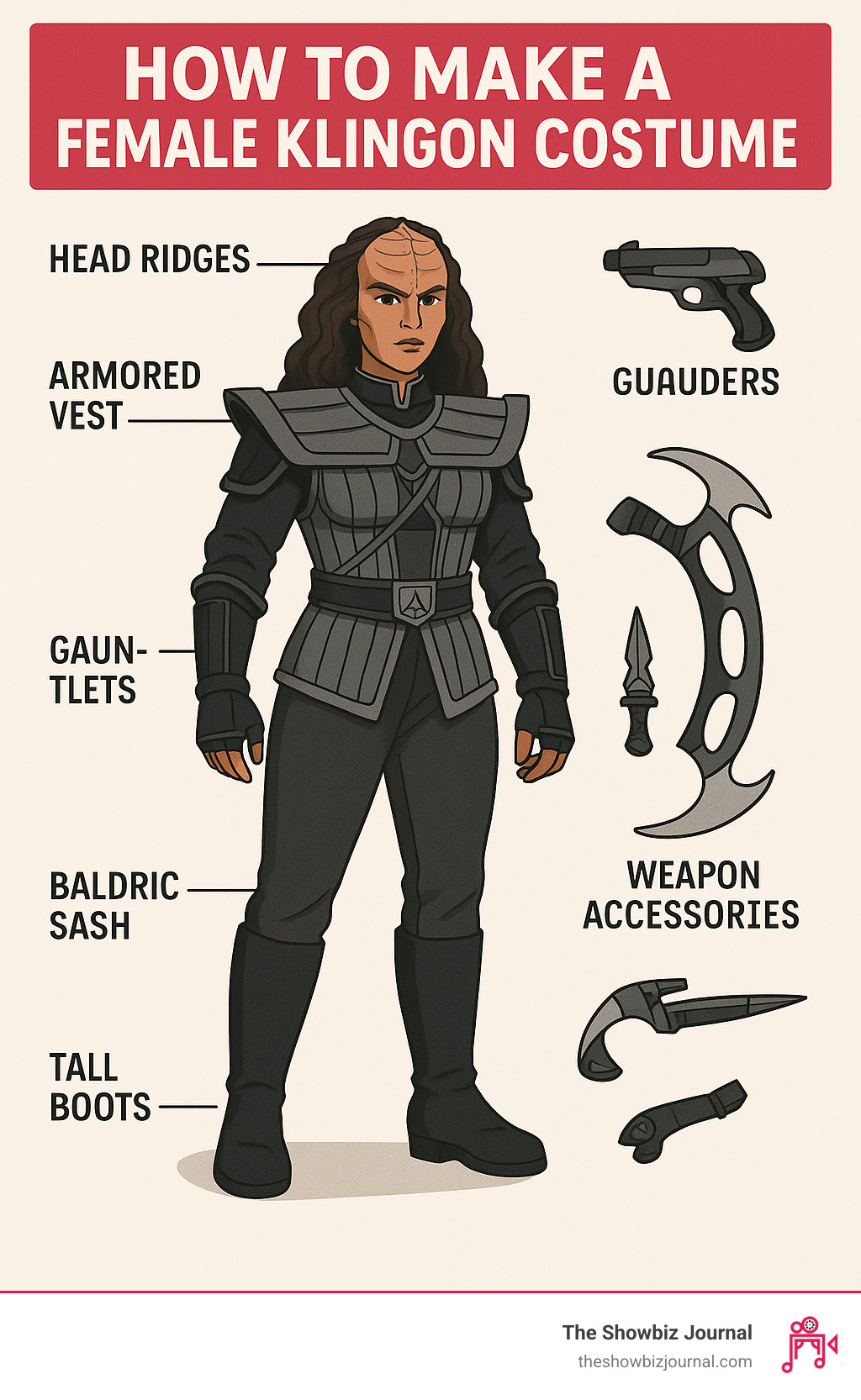
How to make a female klingon costume requires mastering multiple crafting skills – from sculpting head ridges to constructing armor pieces. Here’s your quick roadmap:
Essential Components:
- Head ridges – latex prosthetics or DIY sculpted pieces
- Armor vest – vinyl or faux leather with metallic details
- Shoulder guards – layered foam or fabric construction
- Gauntlets – extended gloves with armor plating
- Baldric sash – diagonal chest strap with house insignia
- Boots – tall black boots or boot covers
- Weapons – bat’leth, disruptor, or d’k tahg props
The Klingon look has evolved across decades of Star Trek, giving you freedom to choose your style. As one costumer shared on forums: “My sister is after a klingon costume but the one you can buy looks pretty naff so I have offered to have a go at making one!” This sentiment captures why so many fans turn to DIY solutions.
Female Klingon characters like K’Ehleyr and the Duras sisters showcase distinct armor styles that blend warrior functionality with neat design. The key is layering textures – smooth vinyl, metallic accents, and weathered details create authentic depth.
I’m Jonas Muthoni TSJ, and through my work covering entertainment culture and costume design trends across Hollywood and Anaheim’s convention scene, I’ve seen how mastering how to make a female klingon costume lifts any cosplayer’s skillset. My experience documenting cosplay culture has shown me the techniques that separate amateur attempts from convention-winning masterpieces.
Deconstructing the Look: Key Elements of Female Klingon Attire
Understanding how to make a female klingon costume starts with appreciating the rich visual evolution across Star Trek’s decades. Female Klingon fashion strikes a fascinating balance between warrior practicality and fierce elegance – a look that’s evolved dramatically from the sleek TNG era designs to the battle-worn aesthetics we saw in DS9.
The beauty of Klingon design lies in its storytelling through costume. Each piece reflects not just personal taste, but house allegiance, rank, and individual warrior spirit. Unlike the standardized Starfleet uniforms we’re used to seeing, Klingon attire celebrates individuality within cultural tradition.
Color palettes form the foundation of authentic Klingon style. Deep blacks anchor most designs, complemented by rich browns and charcoal grays that evoke the rugged landscape of Qo’noS. Metallic accents in silver and gold add that essential warrior glamour – think of how light catches on armor during battle scenes.
Design motifs consistently feature angular lines and layered textures that mimic natural armor or reptilian scales. This isn’t accidental – Klingon aesthetics draw from predator imagery, creating that intimidating silhouette that commands respect across the galaxy.
For visual inspiration across different eras, the Star Trek Online Wiki provides excellent visual examples of how movie uniforms compare to television designs. You’ll notice subtle but important differences that can guide your costume choices. For deeper dives into the cinematic influences behind these iconic looks, explore more info about movies that shaped Klingon visual culture.
Choosing Your Era and Style
The exciting part of crafting your female Klingon costume is choosing your character inspiration. Each era offers distinct advantages, and iconic characters provide perfect blueprints for your design journey.
K’Ehleyr represents the perfect balance of Klingon heritage and Starfleet practicality. Her costumes emphasize mobility over heavy armor, featuring flowing fabrics with subtle Klingon detailing. This approach works beautifully for conventions where you’ll be walking around all day – comfort meets authenticity.
Lursa and B’Etor, the infamous Duras sisters, showcase noble house attire at its most dramatic. Their ornate armor features prominent shoulder spikes, intricate sashes, and striking metallic accents. These designs lean heavily into status symbols – perfect if you want to make a bold impression at Hollywood premieres or Anaheim convention events.
Grilka from DS9 offers a more business-like severity that’s incredibly appealing. Her costumes blend traditional warrior aesthetic with practical authority, reflecting her leadership role. This style works particularly well for professional cosplayers who want to balance authenticity with wearability.
Your character choice determines everything from armor complexity to fabric selection. Are you aiming for formal uniform vs. civilian wear? Battle-ready warrior gear? Or perhaps the neat attire of Klingon nobility? This foundational decision shapes your entire crafting approach.
Core Garment and Armor Components
Every successful female Klingon costume builds from essential components that create that unmistakable silhouette. Understanding these elements helps you prioritize your time and budget effectively.
Your bodysuit or two-piece base provides the foundation for everything else. Most costumers prefer dark, form-fitting base layers – either a complete bodysuit or fitted pants with a long-sleeved shirt. This canvas supports all your armor pieces while ensuring comfort during long wear.
The vest serves as your costume’s centerpiece, typically featuring those distinctive vertical or angular lines that define Klingon style. Some designs incorporate high collars or integrate directly with shoulder guards for a seamless warrior look. The key is achieving that structured, military-inspired silhouette.
Shoulder guards create the broad, imposing profile that makes Klingons instantly recognizable. These padded, rigid pieces extend horizontally from your shoulders, changing your natural silhouette into something formidable. They’re crucial for achieving authentic proportions.
Gauntlets extend from forearm to wrist, adding both protection and intimidation factor. Whether crafted from vinyl, faux leather, or EVA foam, they should flare slightly for that classic Klingon aesthetic. Think of them as statement pieces that draw attention to your warrior hands.
A sturdy belt with ornate buckles or attached pouches serves both decorative and practical purposes. It’s your anchor point for weapon props and helps define your waistline under all that armor layering.
Boots complete your ground-level presence – tall, dark, and preferably without visible laces. The jack boot or combat boot style works perfectly. If you can’t find ideal boots, tall black vinyl boot covers over regular shoes achieve similar results.
The magic happens through layering textures – combining smooth vinyl with rougher fabrics, adding metallic mesh accents, and incorporating chainmail details. This textural variety creates visual depth that photographs beautifully under convention lighting, whether you’re at WonderCon Anaheim or Hollywood costume events.
Gathering Your Materials and Patterns
Building how to make a female klingon costume starts with smart material sourcing, and if you’re in the Hollywood or Anaheim area like I am, you’ve got some fantastic local advantages. The downtown LA fabric district is a cosplayer’s paradise – I’ve spent countless hours there hunting for that perfect textured vinyl that screams “Klingon warrior.” Those heavy-duty upholstery fabrics can transform into convincing armor with the right treatment.
Living near Anaheim means easy access to well-stocked craft stores that carry EVA foam in multiple thicknesses, plus all those specialty paints you’ll need for weathering effects. There’s something satisfying about walking into a local shop and actually feeling the materials before you buy them.
Where to Find Patterns and Inspiration
The Klingon costuming community is incredibly generous with sharing knowledge and resources. Your first stop should absolutely be the Klingon Assault Group (KAG.ORG) – this organization is the gold standard for Klingon fandom. Their website contains extensive guides covering everything from construction techniques to historical accuracy.
The Klingon Costume Goddess is another legendary resource in the community. Her expertise has helped countless costumers achieve that authentic look, and you’ll often find her work referenced through KAG’s network.
Etsy has become a treasure trove for specific Klingon pieces. Search for “Klingon Women” and you’ll find custom prosthetics, house sigils, and even chainmail sashes made to order. Sometimes buying one professionally made piece can serve as a template for crafting the rest yourself.
The Replica Prop Forum (RPF) connects you with serious builders who share detailed construction logs. I’ve seen amazing discussions there about creating Klingon officer vests, complete with pattern modifications and material substitutions.
eBay sellers like ‘Joannes_friends’ occasionally offer Star Trek movie-era patterns, though the instructions can be incomplete. That’s where the community forums become invaluable for filling in the gaps.
Essential Materials for a DIY Female Klingon Costume
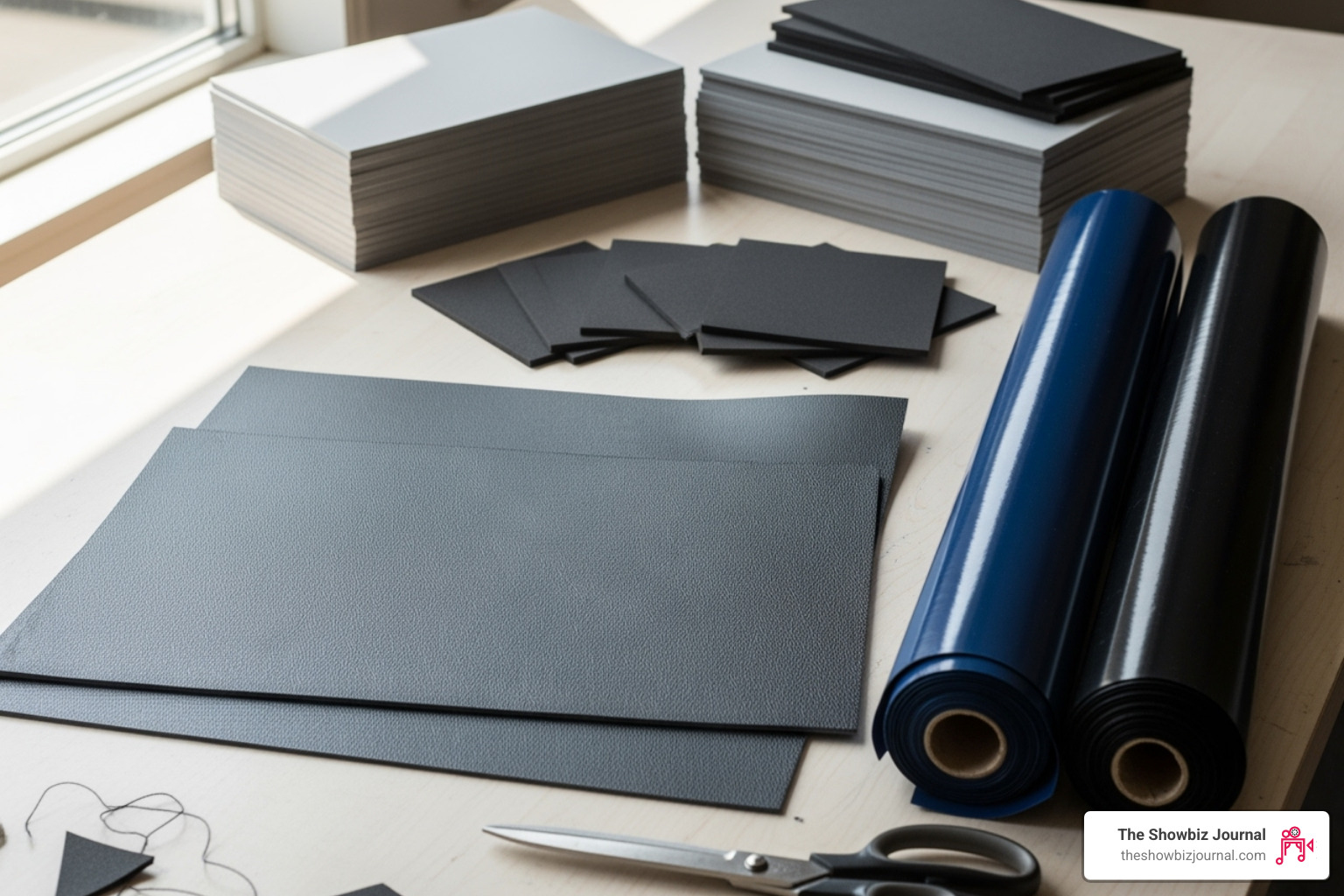
The materials you choose will make or break your costume’s authenticity. Faux leather and vinyl form the backbone of most Klingon builds. While real leather looks amazing, vinyl offers better value and easier handling for beginners. Heavy-duty textured vinyl works beautifully for armor pieces, while lighter stretch vinyl suits areas that need flexibility.
EVA foam has revolutionized cosplay armor construction. This lightweight material cuts easily, shapes with heat, and paints up to look like metal or weathered leather. Stock up on different thicknesses – thin sheets for detail work, thick pieces for major armor components.
Your adhesive arsenal needs variety. Contact cement creates permanent bonds for EVA foam pieces. Hot glue handles quick attachments and decorative elements. Spirit gum or Pros-Aide becomes essential when you tackle those head ridges later.
Fastening systems like heavy-duty snaps or Velcro ensure your armor stays put during long convention days. Nobody wants shoulder guards sliding around during photos.
Acrylic paints in silver, gold, and black create those signature metallic accents. Look for flexible formulations that won’t crack when applied to foam or fabric. Dark grays and browns add realistic weathering that suggests battles fought and won.
Your base layer fabric should prioritize comfort since you’ll wear it for hours. A dark, slightly stretchy blend works best, giving you freedom of movement while maintaining that sleek Klingon silhouette.
Sourcing materials is part of the creative journey. Take time to feel textures, compare weights, and envision how each piece will contribute to your warrior’s story.
The Crowning Glory: Crafting Klingon Head Ridges
Nothing transforms you into a Klingon warrior quite like those iconic forehead ridges. They’re the defining feature that separates a good costume from a truly authentic how to make a female klingon costume experience. When I see cosplayers at Anaheim conventions, the ones with well-executed head ridges always draw the biggest crowds and most admiring looks.
The Klingon Assault Group offers comprehensive guidance through their Headpieces, Make-up, & Wigs – Klingon Assault Group section, which has become the gold standard for anyone serious about Klingon costuming.
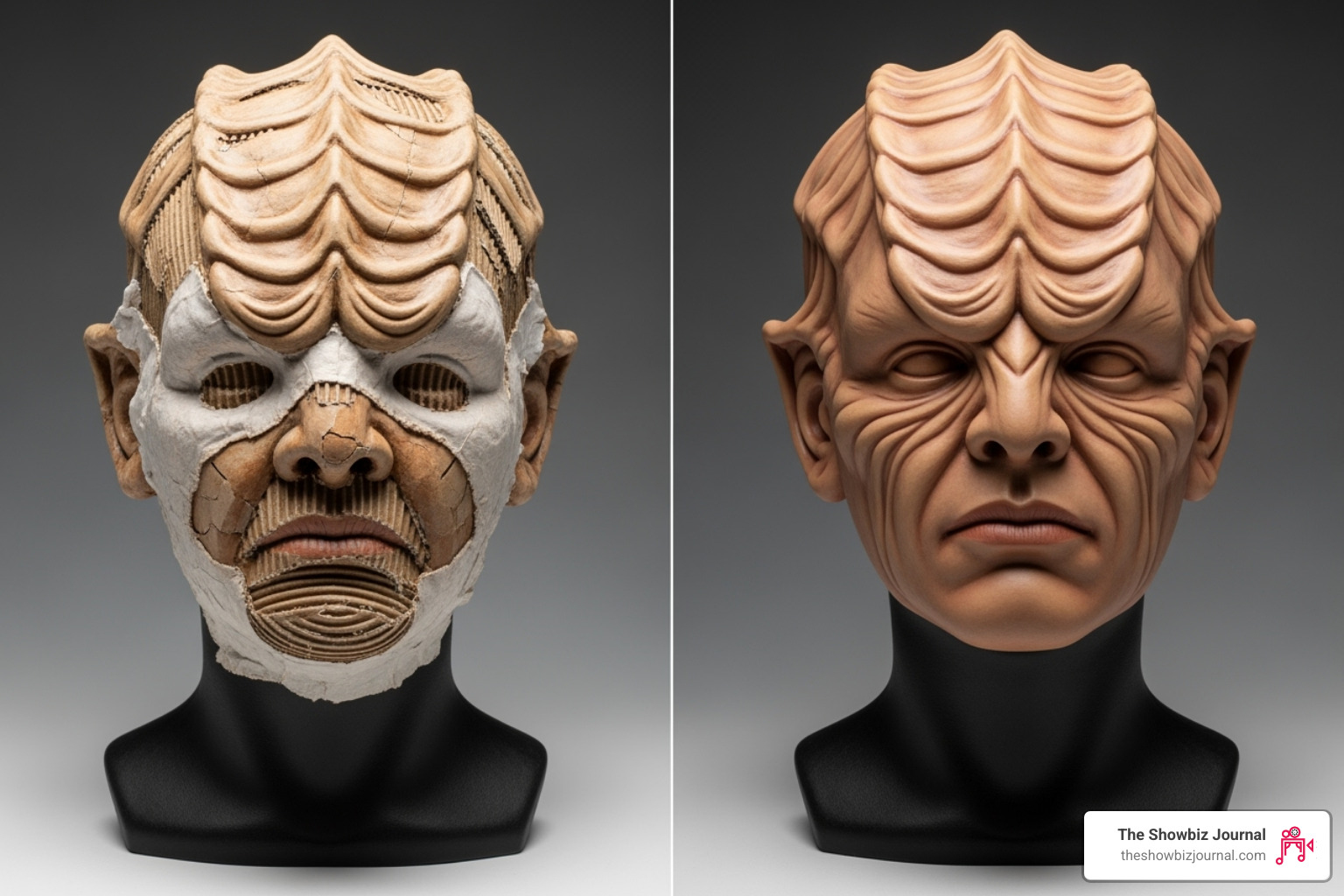
You have two main paths ahead of you: investing in professional prosthetics or crafting your own budget-friendly version. Both approaches can deliver stunning results when done properly.
The Professional Route: Buying and Applying Prosthetics
Professional latex or foam latex prosthetics offer the most seamless, authentic look you can achieve. These pre-sculpted pieces are designed by experts who understand Klingon anatomy and can transform your forehead with Hollywood-level quality.
Finding quality prosthetics is easier than ever thanks to specialized vendors and talented Etsy creators. Shops like “Qob’s Kling Things” by Bill Hedrick have built reputations for screen-accurate pieces that fit comfortably and look incredible under convention lighting.
The real magic happens in the application process. Spirit gum and Pros-Aide are the traditional choices for attaching prosthetics, but makeup artist John Paladin, who has over 20 years of Star Trek convention experience, swears by silicone adhesive like Telesis 5. While it costs more upfront, he explains it’s actually easier to work with and removes cleanly without damaging your skin or the prosthetic.
Proper application starts with preparation. Clean your forehead thoroughly with alcohol or witch hazel to remove any oils. Apply your chosen adhesive to both the prosthetic and your skin, then carefully position the piece. Press firmly and hold for several seconds to ensure good contact.
Here’s where many beginners stumble: blending the edges is absolutely critical. As Paladin puts it, edge blending is “EVERYTHING” for achieving a natural look. Use a small amount of adhesive and a blending tool to thin out the prosthetic edges until they disappear seamlessly into your skin. Powder the blended areas once dry to set everything in place.
Makeup application requires rubber mask grease paint specifically designed for prosthetics. Paladin recommends applying it with a sponge or brush lightly dampened with 99% alcohol for a realistic “washed” appearance. Build up layers gradually, adding shadows in the recesses and highlights on the raised ridges to create depth and dimension.
Don’t forget about your hair and eyebrows. Most female Klingon looks feature long, dark hair that you can achieve with quality wigs from suppliers like CosWorx or SamsBeauty.com. Attach the wig to the top edge of your prosthetic using adhesive. For authentic Klingon eyebrows, Paladin suggests using crepe hair applied with adhesive and shaped to create that distinctive angular brow.
The Budget DIY Method for Making Head Ridges
If you’re working with a tight budget or love hands-on crafting challenges, creating your own head ridges can be incredibly rewarding. The Woodland Elf has developed an ingenious budget-friendly tutorial for head ridges using everyday household items that delivers surprisingly professional results.
The tinfoil method has become legendary among budget cosplayers for good reason. You’ll need heavy-duty tinfoil, paint in your skin tone plus darker shades for contouring, spirit gum or similar prosthetic adhesive, and a strong metal-bonding glue like Power-tac.
Start by shaping your ridges with crumpled tinfoil. Study reference photos of characters like K’Ehleyr or the Duras sisters to decide on your ridge pattern. You can create individual ridges and assemble them, or sculpt one continuous piece covering your entire forehead.
Reinforcement is key to making your tinfoil ridges durable enough for a full day of convention wear. Use your metal-bonding glue to secure multiple layers together, ensuring the ridges maintain their shape even with movement and facial expressions.
Once everything’s dry and sturdy, attach the ridges to your forehead using spirit gum or prosthetic adhesive. Take your time with positioning – you only get one shot at getting this right.
Painting requires patience but delivers the final change. Start with your base skin tone, then add darker paint in the crevices and lighter shades on raised areas to create that three-dimensional effect. As The Woodland Elf finded, you might need several attempts to get the color matching perfect.
Alternative DIY approaches include using sculpting clay or liquid latex for those who prefer working with different materials. Air-dry clay or polymer clay can be sculpted, sealed, and painted for a more durable option, while liquid latex built up in layers creates a flexible prosthetic that moves naturally with your expressions.
How to Make a Female Klingon Costume: Assembly and Details
Now comes the exciting part – bringing all your carefully prepared elements together into a complete warrior ensemble. This is where your how to make a female klingon costume project truly transforms from scattered pieces into an imposing Klingon presence. The assembly process requires patience and attention to detail, but the results are absolutely worth it. For more insights into the art of changing fantasy into reality, check out More info about Entertainment on our site.
Building the Armor: Vests, Shoulders, and Gauntlets
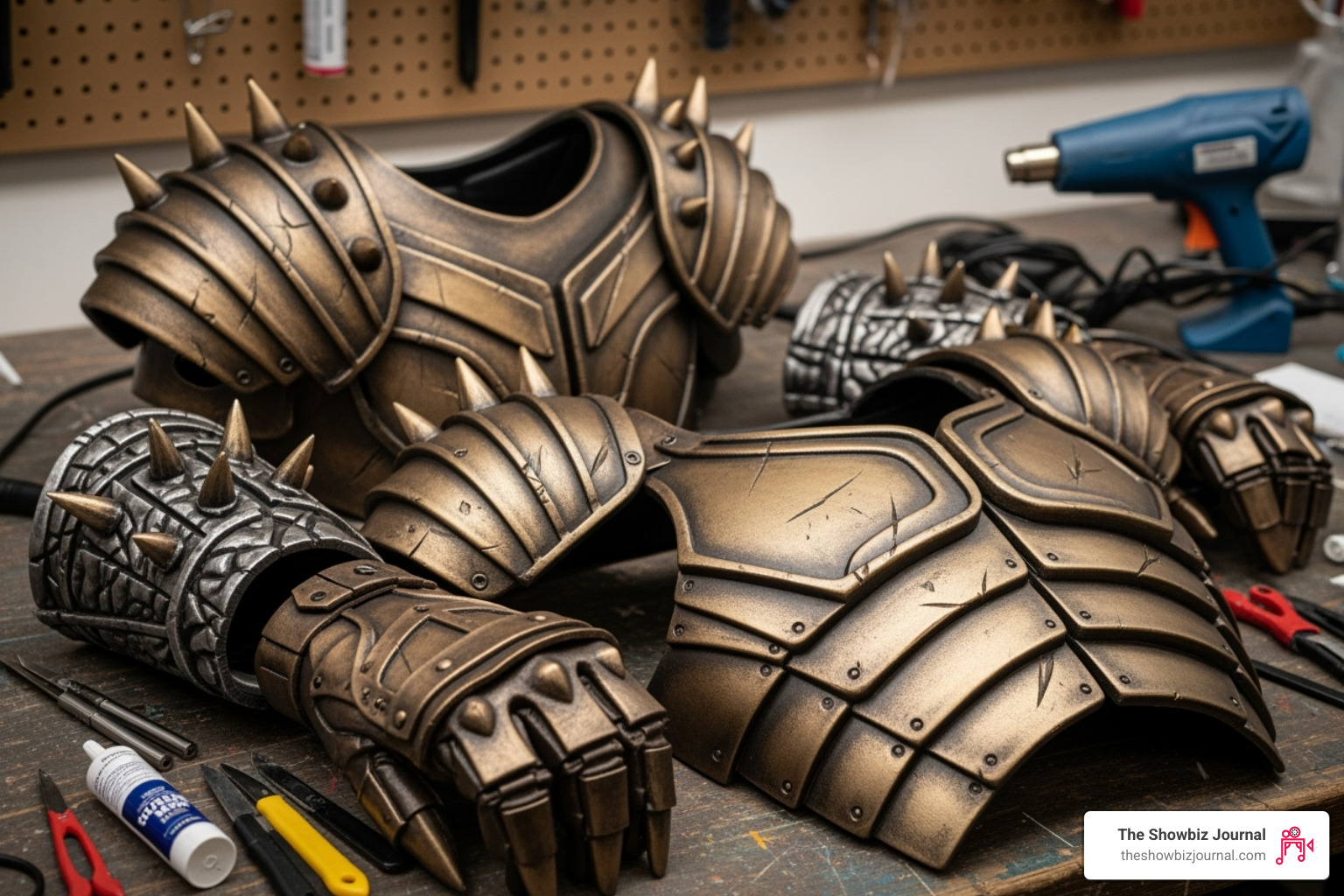
The armor construction is where your vinyl, faux leather, and EVA foam materials really shine. This is the foundation that gives you that unmistakable Klingon silhouette that commands respect at any convention.
Creating your vest patterns can be approached in two ways – adapting existing commercial patterns or drafting from scratch. If you’re going the custom route, draping fabric directly on yourself or a dress form gives the most accurate fit. The classic Klingon officer vest often features a distinctive peplum that flares over the hips, which gets covered by the belt later.
When working with vinyl or faux leather, you’re in luck because these materials don’t fray like traditional fabrics. However, they also don’t stretch, so your pattern needs to account for all necessary movement. Double-stitching vertical or angular strips onto the main vest body creates that authentic, battle-tested appearance that separates amateur attempts from convention-worthy pieces.
Shoulder guards are absolutely crucial for achieving that broad, intimidating Klingon profile. EVA foam excels here because you can cut, shape, and layer it easily. Use a heat gun to gently curve the foam pieces, creating that rigid horizontal extension that makes Klingon warriors look so imposing. Layer multiple foam pieces for added dimension, and don’t forget to paint them with metallic accents.
For gauntlet construction, start with long black gloves as your base, then build up armored plates using shaped vinyl or foam. The flared wrist sections are particularly important – they add visual weight and suggest serious combat capability. Just make sure your design still allows for hand movement, especially if you’ll be carrying props.
Finishing Touches: Sashes, Belts, and Weaponry
These final details transform a good costume into something truly spectacular. They tell the story of your character’s rank, house allegiance, and battle experience.
The baldric sash worn diagonally across the chest is perhaps the most recognizable Klingon accessory after the head ridges. While Worf’s chainmail version is iconic, you can create yours from heavy metallic fabric or mesh. This is the perfect place to display your chosen house sigil – whether you align with existing houses from the shows or create your own family crest.
Belt selection shouldn’t be overlooked. A thick, substantial belt in dark leather or vinyl grounds the entire look. Adding pouches or tool attachments suggests a warrior who’s prepared for anything. The belt also helps define your waist and creates a natural break between the vest and lower body.
Weapon selection requires careful consideration, especially for conventions here in Anaheim like WonderCon. The classic bat’leth (Sword of Honor) remains the most popular choice, but disruptor pistols and d’k tahg ceremonial knives are equally authentic options. You can find quality replicas online or craft lightweight versions from EVA foam and wood.
Prop safety is absolutely critical at conventions. Always check specific venue policies before attending – what’s acceptable at one event might be prohibited at another. Clearly marking props as non-functional and ensuring they meet size restrictions will save you headaches at security checkpoints.
Common Mistakes to Avoid When Making Your Costume
Learning from others’ experiences can save you significant time and frustration. Here are the most frequent pitfalls we’ve observed over years of covering the cosplay scene.
Poor fitting is the fastest way to undermine all your hard work. Klingon armor should look imposing but still allow natural movement. Take accurate measurements throughout the build process and do frequent fittings. A costume that restricts your movement or looks uncomfortable immediately breaks the warrior illusion.
Material comfort matters more than you might expect. While vinyl and foam create amazing visual effects, anything touching your skin needs to be bearable for hours. An itchy base layer or chafing armor pieces will make your convention experience miserable, no matter how great you look.
Prosthetic blending can make or break your entire look. As professional makeup artists emphasize, visible seams where head ridges meet natural skin destroy the illusion instantly. Take extra time with edge blending and makeup application – this detail separates amateur attempts from professional-quality results.
Weathering effects shouldn’t be ignored. Brand-new, pristine armor looks less authentic than gear that’s seen some battles. Light weathering with dark paints, dry-brushing techniques, and subtle wear marks suggest a warrior with real experience.
Convention policies vary significantly between events. What works at smaller local gatherings might not meet standards for major conventions like those held annually in Anaheim. Always research specific prop and weapon policies well before your event date to avoid disappointment at the door.
Conclusion
Creating how to make a female klingon costume has taken us on an epic journey through the warrior traditions of the Klingon Empire. From the busy fabric districts of downtown Los Angeles to the creative workshops scattered throughout Anaheim, we’ve covered every aspect of bringing these fierce characters to life.
The path we’ve traveled together – from choosing your era and character inspiration to mastering the art of head ridge application – reflects the same dedication that drives Hollywood’s costume designers and the passionate cosplay community here in Southern California. Whether you followed K’Ehleyr’s practical warrior aesthetic or acceptd the ornate armor of the Duras sisters, you’ve learned skills that extend far beyond a single costume.
The beauty of Klingon costuming lies in its complexity and reward. Those hours spent blending prosthetic edges, weathering armor pieces, and perfecting the drape of your baldric sash all contribute to that magical moment when you first see your completed change. It’s the same thrill that drives our vibrant entertainment industry here in Hollywood – the power of becoming someone entirely different.
The cosplay community, especially around convention hotspots like Anaheim, thrives on shared knowledge and mutual support. The resources we’ve explored – from the invaluable Klingon Assault Group to budget-friendly tutorials – represent years of collective wisdom from fellow warriors who’ve walked this path before you.
As you prepare for your first convention appearance, whether it’s WonderCon Anaheim or another local gathering, carry yourself with the honor and pride befitting a true Klingon warrior. Qapla’! – may your costume bring you success and the respect of your fellow cosplayers.
The techniques you’ve mastered here – from foam armor construction to prosthetic application – open doors to countless other costume projects. For those inspired to explore more cinematic character changes, Explore more iconic movie costumes on The Showbiz Journal for your next creative challenge.

About the author
Annelise Sylta
Annelise Sylta is a member of the editorial staff at The Showbiz Journal. She holds an MBA from FIDM and brings a professional background in marketing, communications, branding, and audience engagement to her work with the publication. Her experience provides an additional perspective on the intersection of entertainment, culture, media, and contemporary lifestyle.


