Beyond Baggy: Decoding 90s Rave Outfits for Guys
Decode the iconic 90s rave clothes men wore. Learn about baggy styles, bright colors, and DIY looks from Hollywood's legendary scene.

More Than Just a Party, It Was a Movement
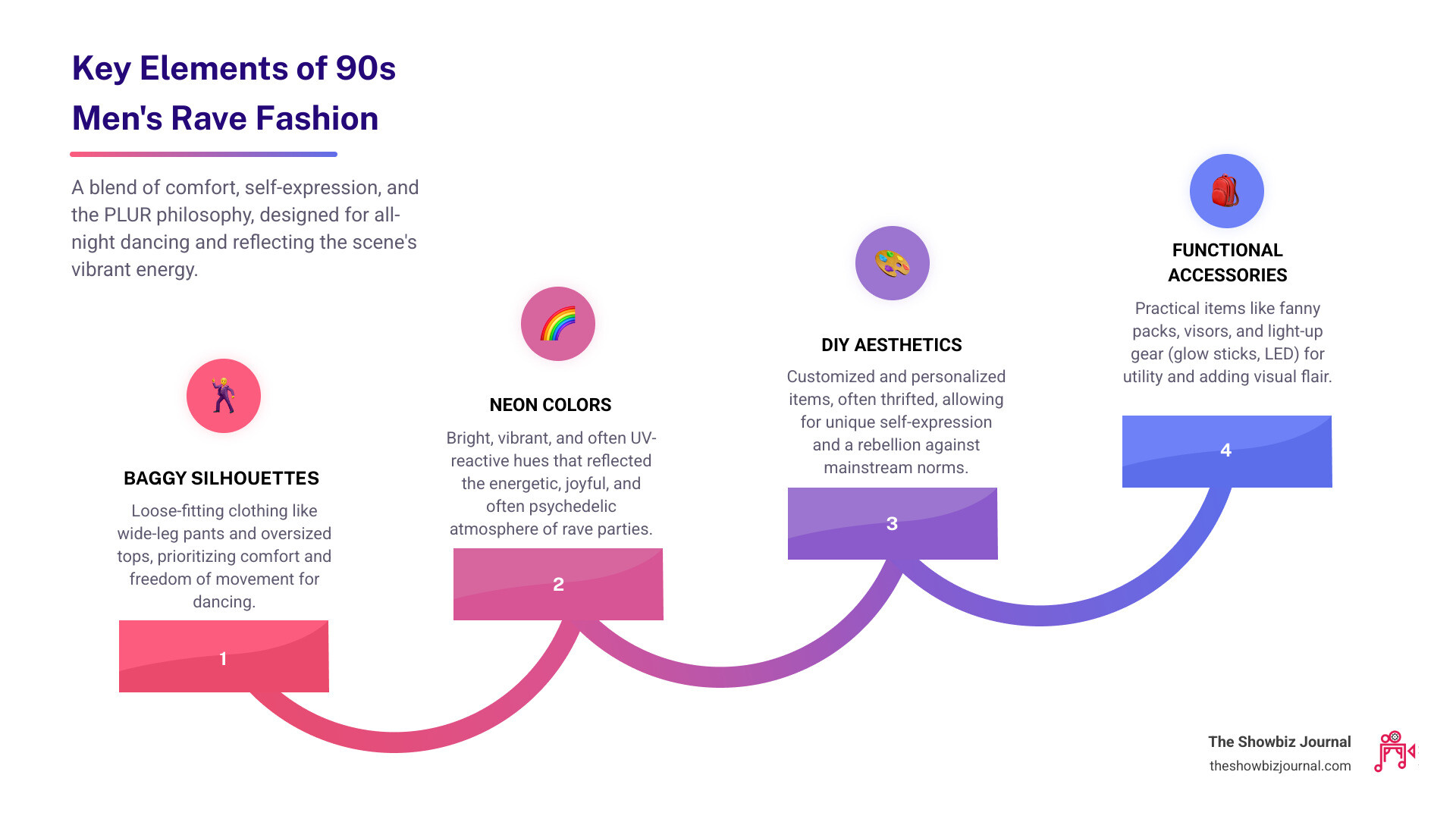
For men stepping onto the dance floor, 90s rave clothes men were a bold statement of individuality and comfort. The key elements included:
- Baggy Bottoms: Wide-leg pants like JNCOs or UFOs, allowing freedom of movement for dancing.
- Vibrant Tops: Brightly colored graphic t-shirts, often featuring the iconic smiley face, fractals, or cartoon motifs.
- Sportswear Influence: Athletic brands like Adidas and Nike for comfortable sneakers and track jackets.
- Unique Accessories: Kandi bracelets, pacifiers, fanny packs, and light-up items for visual flair and practicality.
The 1990s rave scene was more than just music and dancing. It was a cultural movement. Across Southern California, from legendary warehouse parties to iconic venues in Hollywood and Anaheim, rave culture thrived.
Fashion played a huge part in this. It was a way for attendees to express themselves. It reflected the era’s spirit of Peace, Love, Unity, and Respect (PLUR). This guide will help you understand this unique fashion moment.
As Jonas Muthoni TSJ, Founder and Editor-in-Chief of The Showbiz Journal, I’ve spent years immersed in understanding how subcultures, like those seen in 90s rave clothes men, influence popular trends. My background in digital media and SEO strategy uniquely positions me to decode these sartorial shifts, ensuring authentic voices continue to shape pop culture.
The Ethos Woven into the Fabric: Why Ravers Dressed the Way They Did
The defining characteristics of 90s rave clothes men were deeply intertwined with the culture and music of the era. It wasn’t just about looking cool; it was about embodying the spirit of the rave. We saw fashion as a form of rebellion against mainstream norms, a step into a world where self-expression was paramount. This was particularly true in Hollywood and Anaheim, where the underground scene fostered a strong sense of community and creative freedom.
The core tenets of rave culture, Peace, Love, Unity, and Respect (PLUR), were subtly woven into the fashion choices. The bright colors, open-minded designs, and shared accessories like Kandi bracelets fostered connection and a collective identity. Ravers were creating a temporary utopia, and their clothing reflected that joyful, inclusive vision.

The Sound of Style
Music was the heartbeat of the rave, and it undeniably influenced the attire. Originating from the acid house parties of England, electronic music genres like Techno, Trance, Drum and Bass, and Breakbeat each had their subtle sartorial nuances.
Acid House, with its psychedelic undertones, popularized the ubiquitous smiley face shirt, a symbol of happiness and unity that became synonymous with the scene. As Hardcore raves emerged, influenced by artists like Altern8, we saw boiler suits and more industrial looks gaining traction, sometimes even hazmat suits, offering a unique blend of practicality and statement. Trance music, often more melodic and ethereal, might have inspired more flowing silhouettes or psychedelic prints.
The connection between fashion and the local underground entertainment scene in Southern California was palpable. Ravers in Hollywood and Anaheim often blended traditional rave wear with elements of skate and surf culture, leading to a truly unique West Coast aesthetic. This regional difference meant that while the core elements remained, the interpretation could vary, reflecting local influences and the diverse genres played at different parties.
Comfort is King
Beyond the aesthetics, comfort and practicality played a crucial role in the design of men’s rave wear. When you’re dancing for hours, sometimes all night, in crowded venues or vast outdoor spaces, your clothing needs to keep up.
Baggy clothes weren’t just a style choice; they were a functional necessity. Wide-leg pants and oversized tops allowed for maximum freedom of movement, essential for intense dance styles like shuffling. Breathable fabrics were key to avoiding overheating in packed, sweaty environments. We often sought out lightweight materials that wouldn’t weigh us down as we moved to the thumping bass.
Think about it: who wants to be constricted when they’re trying to achieve a state of euphoric dance? The emphasis was on uninhibited movement, and fashion facilitated that. In Hollywood and Anaheim, where warehouse parties could get incredibly hot, this focus on functional, comfortable clothing was even more pronounced.
The Definitive Guide to 90s Rave Clothes Men Wore
Alright, let’s get down to the threads! If you were a guy heading to a rave in the 90s, your outfit wasn’t just a random pick from the closet. It was a carefully chosen ensemble designed for comfort, expression, and hours of non-stop dancing. This section breaks down the essential clothing items that truly defined the look for 90s rave clothes men, from those iconic, super-wide pants to statement-making tops and the sturdy footwear built for the dancefloor.
Bottoms: The Wider, The Better
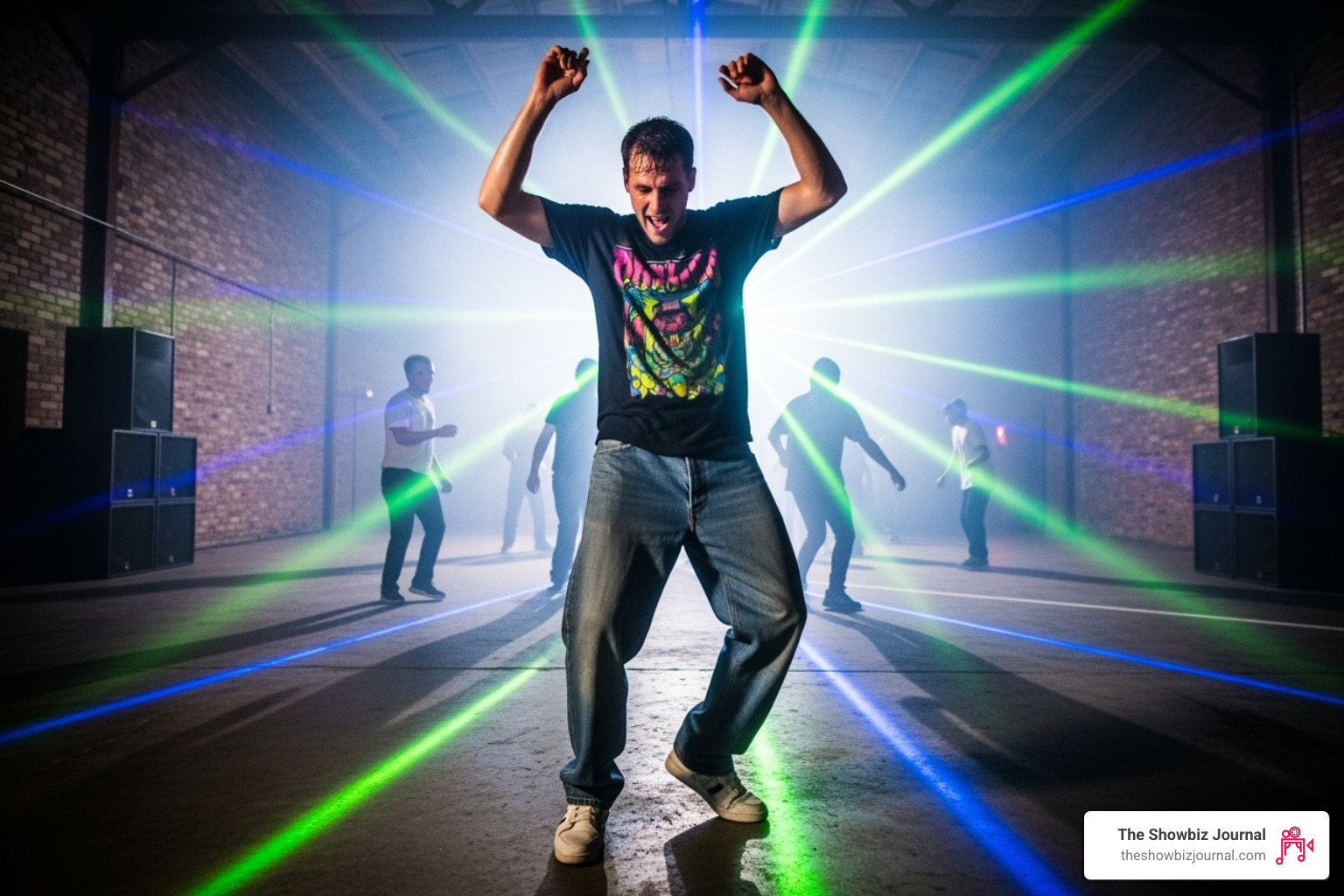
When it came to pants, the rule was simple: the wider, the better! Baggy jeans, especially from brands like JNCOs, were an absolute must-have. These weren’t just about looking cool; their incredibly wide legs gave you amazing freedom of movement. This was perfect for creating that “floating” illusion when you were really getting into shuffling on the dancefloor.
Another incredibly popular choice was UFO pants. These were often lighter than JNCOs, which was a huge plus for staying comfortable and avoiding overheating during those intense dance sessions. They also usually came with tons of pockets, which were super handy for stashing all your essentials. You’d also see guys rocking cargo pants and track pants, always prioritizing comfort and utility. Even baggy shorts were common, especially when the weather called for it, like at outdoor events or in the warmer climates of Hollywood and Anaheim. These roomy bottoms were a common sight at raves all over Southern California.
Tops: Graphics, Brands, and Brights
The upper half of your outfit was where you could really let your personality shine! The iconic smiley face shirt was a universal symbol, instantly recognizable and a nod to the acid house roots of the culture. Beyond that, oversized graphic tees were incredibly popular. These often featured wild motifs like fractals, trippy cartoons, or abstract patterns. Some even had cool light-up designs that were battery-powered, adding an extra visual kick to your moves!
Vintage sportswear also made a big splash. You’d frequently see guys wearing polo shirts and t-shirts from classic brands like Polo, Nautica, and Tommy Hilfiger, blending casual cool with a touch of brand loyalty. For those who wanted to stay extra cool in crowded venues, sleeveless tops and tank tops were a smart choice, especially if they came in bright colors or had those signature trippy designs. In places like Hollywood and Anaheim, local thrift stores were absolute goldmines for finding these unique, often one-of-a-kind tops that truly stood out.
Footwear: Built for the Dancefloor
No rave outfit was complete without the right shoes, and comfort was king. For those epic dance sessions, chunky sneakers were the go-to. Brands like Adidas and Puma were hugely popular, offering the necessary support and cushioning to keep you going for hours on your feet. Nike running shoes were also a common sight, proving their worth for endless dancing.
Beyond athletic sneakers, some ravers accepted more unconventional footwear. Painted Doc Martens and platform shoes in wild neon colors were popular for guys who wanted to make a bold fashion statement. While they might have been a bit less practical for hardcore shuffling, they definitely turned heads! The main takeaway for any footwear was durability and comfort – you needed shoes that could last until dawn. You’d spot a mix of all these styles across Southern California’s vibrant rave scene, each pair ready for countless dance moves.
It’s All in the Details: Essential 90s Rave Accessories
Accessories were crucial for both function and expressing individuality, turning a simple outfit into a full rave-ready look. They were the finishing touches that lifted a good outfit to a great one, often carrying practical uses alongside their stylistic flair.
Functional & Funky Gear
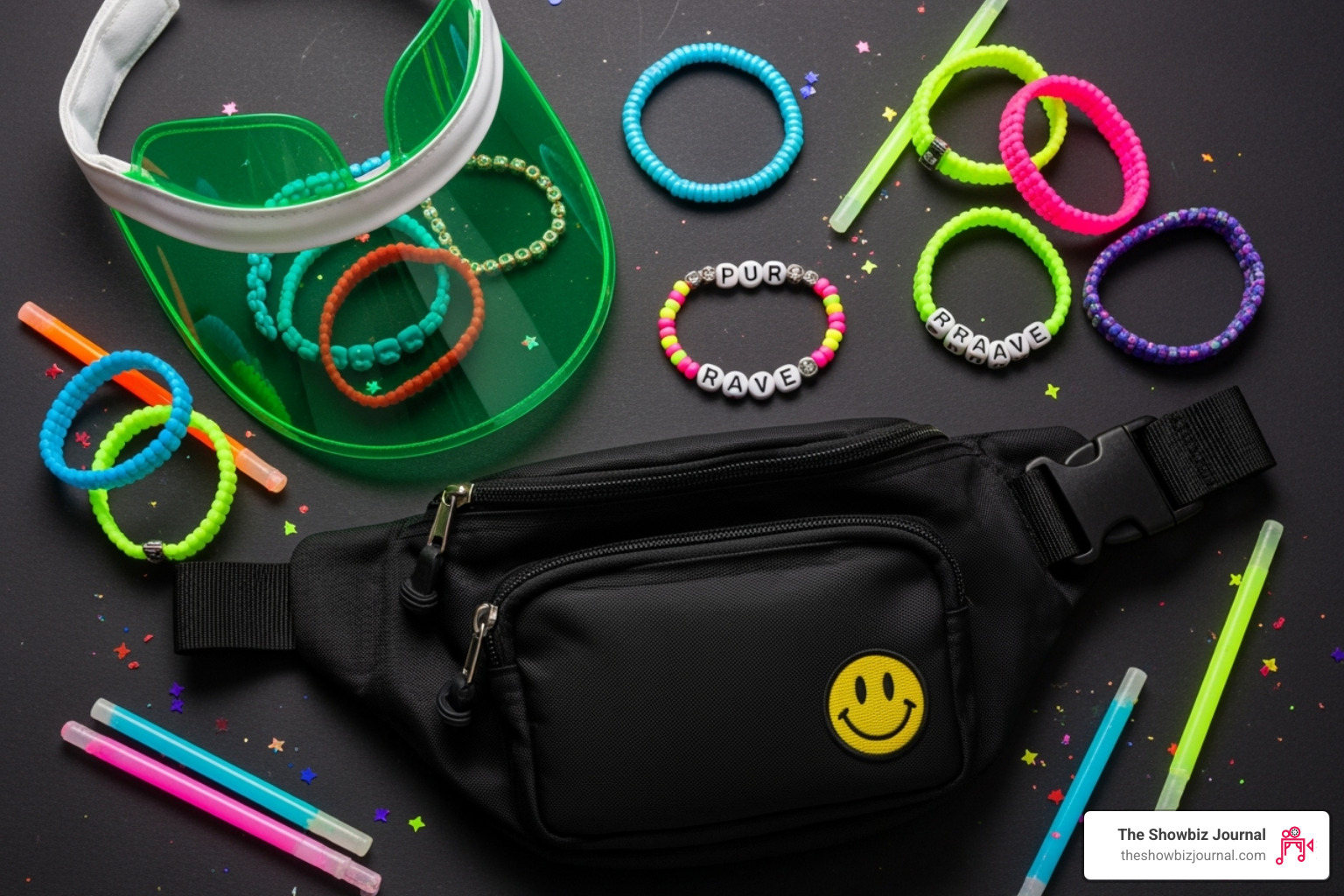
We loved our accessories, and they served both practical and expressive purposes. Here’s a list of essential 90s rave clothes men accessories:
- Kandi Bracelets: Made from beads and charms, Kandi bracelets were a popular accessory for expressing individuality and, crucially, for trading with others as a symbol of PLUR. We would spend hours making them to exchange with new friends.
- Pacifiers: A common accessory that became popular to help ravers avoid grinding their teeth, a side effect of ecstasy (MDMA). They quickly transformed from a practical item into a fashion statement, often worn on Kandi necklaces.
- Rave Visors: Hats with clear plastic visors were worn to protect eyes from bright lights and add a distinctive, futuristic look.
- Bucket Hats: A casual yet stylish choice that offered sun protection at outdoor events and completed a relaxed, cool vibe.
- Fanny Packs & Small Backpacks: Small, colorful backpacks and fanny packs were common accessories for carrying essentials like water, glow sticks, and small personal items. Their practicality was best.
- Glow Sticks, LED Gloves, & Lighted Visors: Used to create visual effects and light shows, these items added an interactive element to the rave experience.
- Light-Up Sunglasses: Ray-Ban style sunglasses that lit up in psychedelic colors were a fashionable accessory, perfect for enhancing the visual experience and protecting eyes from strobe lights.
Many of these items were often sourced from local shops in Hollywood and Anaheim, contributing to the unique character of the local rave scene.
The DIY Spirit
A significant aspect of 90s rave clothes men was the strong DIY ethos. Before the internet made everything easily accessible, ravers often customized and personalized their clothes. This meant hand-painting Doc Martens, altering wide-leg pants, or creating unique graphic tees.
Handmade Kandi bracelets, as we mentioned, were a prime example of this personal touch and the emphasis on community building. Sourcing clothes from local thrift stores was common practice, allowing us to find unique pieces that could be adapted or worn as-is, ensuring that no two outfits were exactly alike. This reflected a pre-internet era of subculture in Southern California, where creativity and resourcefulness were highly valued in crafting unique, one-of-a-kind outfits. It was about making your mark, not just buying off the rack.
The Raveolution: From 90s Underground to Today’s Mainstream
It’s pretty amazing how much the impact of 90s rave clothes men still resonates today. What started as a bold fashion statement in the underground scene has truly shaped contemporary streetwear and festival style. You can spot echoes of that 90s rave aesthetic everywhere, from runway collections to high street fashion. Just look at the comeback of baggy jeans and wide-leg pants – that’s a direct nod to the comfort-first, oversized silhouettes of the rave era. And those vibrant neon color palettes? Once exclusive to the dance floor, they now frequently appear in everyday fashion, movies, and entertainment. Our very own Hollywood and Anaheim, with their rich history in entertainment and fashion, certainly played a big part in embracing and adapting these rave aesthetics into broader pop culture.
How to Style 90s Rave Clothes for Men Today
So, if you’re keen to bring some of that vibrant 90s rave energy into your closet today, it’s all about finding the right balance. We suggest mixing some cool vintage finds with modern pieces. This way, your look feels authentic without screaming ‘costume party!’
For an authentic vibe, keep an eye out for those wide-leg pants (think JNCOs or similar), graphic tees with awesome retro designs (like the classic smiley face or cool abstract patterns), and chunky sneakers. To make it more everyday-friendly, you can easily tone down the look. Try pairing one of those graphic tees with regular-fit jeans, or just add a pop of neon as an accent instead of going full bright from head to toe.
Want to find those hidden gems? Your best bet for authentic pieces are the local thrift stores and vintage shops right here in Hollywood and Anaheim. Don’t forget online vintage marketplaces too – they’re treasure troves! The real goal is to capture the spirit of the era: comfort, individuality, and just a little bit of playful rebellion.
The Legacy in Modern Festival Culture
The spirit of 90s rave clothes men is definitely alive and thriving at modern music festivals all across Southern California today. Events like EDC or Coachella are huge and much more commercial than those intimate underground parties of the 90s in Hollywood and Anaheim. But even with those big changes, the main fashion ideas from back then are still very much here.
You’ll still spot bright colors everywhere, comfy and expressive clothing, and that strong desire for everyone to show off their unique style. However, the look has certainly grown up a bit. Today’s festival wear often includes more high-tech elements. Think LED lights built right into clothes, cool fiber optic fabrics, and fancy glowing designs. This shows just how much technology has become a part of both music and fashion, letting us create even more amazing visual displays.
But through all these changes, the core spirit of self-expression and community from 90s rave culture keeps driving festival fashion. It’s still all about feeling free, loving the music, and connecting with others through awesome shared experiences – and, let’s be honest, some killer outfits!
Frequently Asked Questions about 90s Men’s Rave Fashion
Have some lingering questions about the unique style of the 90s rave scene? You’re in the right place! We’re here to clear up some common curiosities about 90s rave clothes men wore.
Why were pacifiers so popular at 90s raves?
It might seem a little odd at first glance, but pacifiers became a surprisingly common accessory at 90s raves. Their popularity actually stemmed from a very practical reason: they helped prevent teeth grinding. This was a common side effect for many who used ecstasy (MDMA) at raves.
What started as a simple functional item quickly transformed into a distinct fashion statement. You’d often see them worn proudly on Kandi necklaces or even just clutched in hand. It became an instantly recognizable symbol of the rave culture, adding to the playful and childlike aesthetic of the scene.
What are the biggest misconceptions about men’s rave fashion?
One of the biggest misconceptions about 90s rave clothes men is that it was all just baggy jeans and super bright neon t-shirts. While those items were definitely popular, the reality was much more diverse! The rave fashion scene was a broad spectrum of styles.
You’d find significant influence from sportswear, with classic brands making a big splash. Hip-hop culture also played a role, bringing in its own baggy silhouettes and street style. Even skate and punk aesthetics found their way into some looks. Not every outfit was a day-glo explosion; some ravers preferred darker, more industrial styles, especially depending on the electronic music genre they were into. The unifying theme was always comfort and a strong desire for self-expression, no matter the specific look.
Were there regional differences in style, like in California?
Absolutely, there were regional differences in rave style! While the core elements of rave fashion were universal, local influences definitely shaped specific looks. Think of it like different dialects of the same language.
In Southern California, especially in vibrant hubs like Hollywood and Anaheim, rave fashion often blended seamlessly with the prevailing skate and surf cultures. This created a unique West Coast rave style. You’d see a slightly more laid-back, often sun-bleached aesthetic. This meant incorporating elements like classic Vans sneakers, board shorts (or baggy shorts), and a strong emphasis on comfort for those outdoor events. This distinct blend made the rave style in Hollywood and Anaheim stand out from its East Coast or European counterparts, truly giving it its own unique flavor.
Conclusion: The Beat Goes On
As we’ve journeyed through the vibrant world of 90s rave clothes men, it’s clear this wasn’t just about what you wore; it was about how you felt and what you stood for. Think about those baggy silhouettes that offered endless freedom to move, the bright colors that popped under strobe lights, and that incredible DIY ethos that made every outfit truly unique.
At its heart, this style was deeply woven into the PLUR philosophy – Peace, Love, Unity, and Respect. Whether you were at a legendary warehouse party or one of the busy clubs in Hollywood or Anaheim, the fashion was a visible extension of that spirit. It was all about prioritizing comfort for hours of dancing, celebrating individuality, and fostering a strong sense of community on the dance floor.
The beat of the 90s rave scene undeniably goes on. Its influence is still echoing loudly in today’s streetwear and vibrant festival fashion. From the comeback of wide-leg pants to the resurgence of neon hues, the spirit of that era is alive and well. Here at The Showbiz Journal, we’re passionate about tracking how these incredible subcultures, like the one that defined 90s rave clothes men, continue to shape and inspire mainstream trends. We’re always looking for that next compelling beat that sparks new styles and keeps pop culture evolving.
Explore more 90s trends in our Lifestyle section

About the author
Annelise Sylta
Annelise Sylta is a member of the editorial staff at The Showbiz Journal. She holds an MBA from FIDM and brings a professional background in marketing, communications, branding, and audience engagement to her work with the publication. Her experience provides an additional perspective on the intersection of entertainment, culture, media, and contemporary lifestyle.