What Did Ravers Wear? A Deep Dive into 90s Rave Style
Uncover the vibrant world of 90's rave style! Learn what ravers wore, from baggy pants to Kandi, and its lasting legacy.

The Birth of PLUR and a Fashion Revolution
90’s rave style was more than just clothing – it was a visual manifesto of freedom, self-expression, and community that emerged from underground dance floors and changed fashion forever.
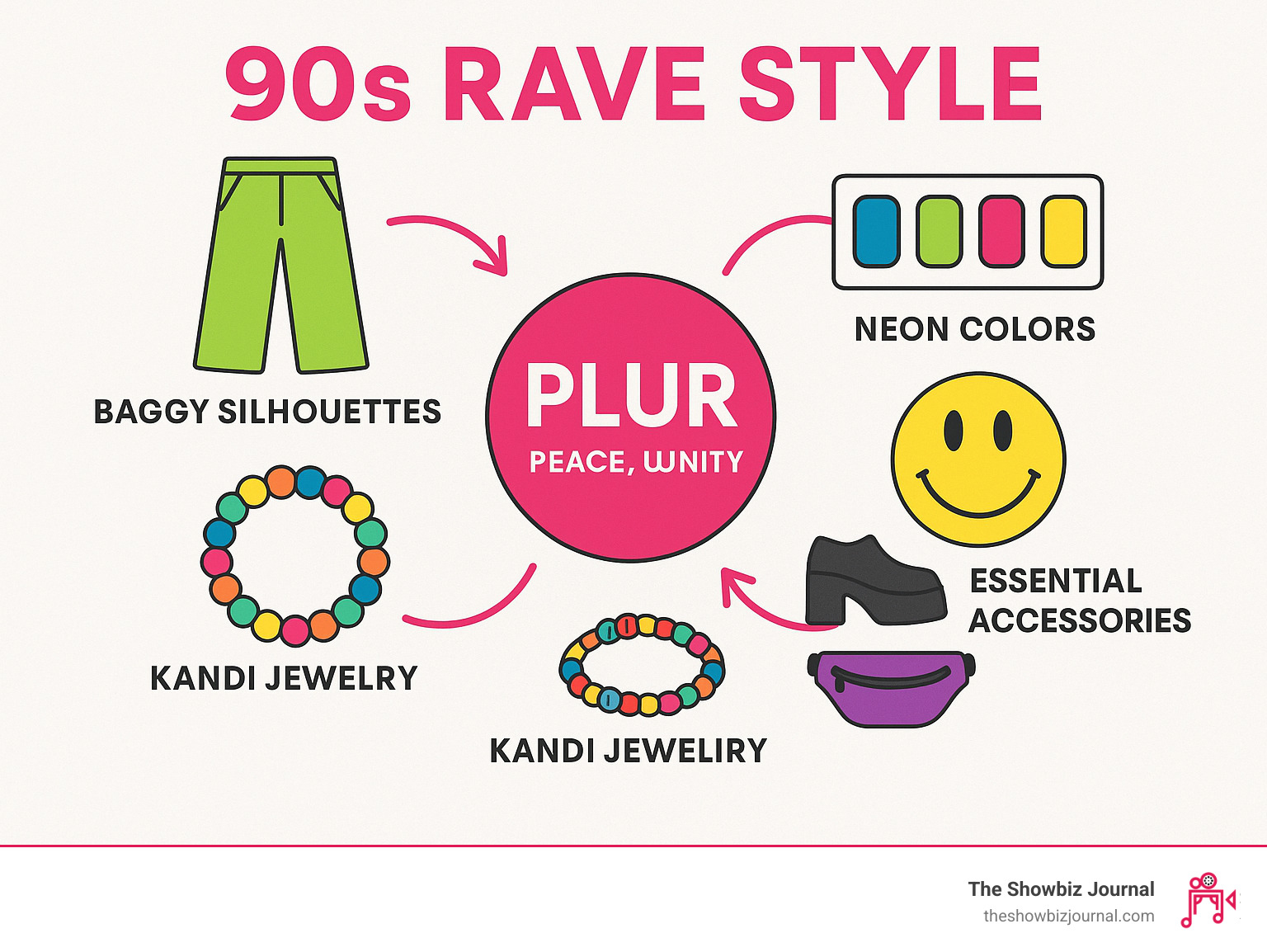
Key elements of 90s rave style:
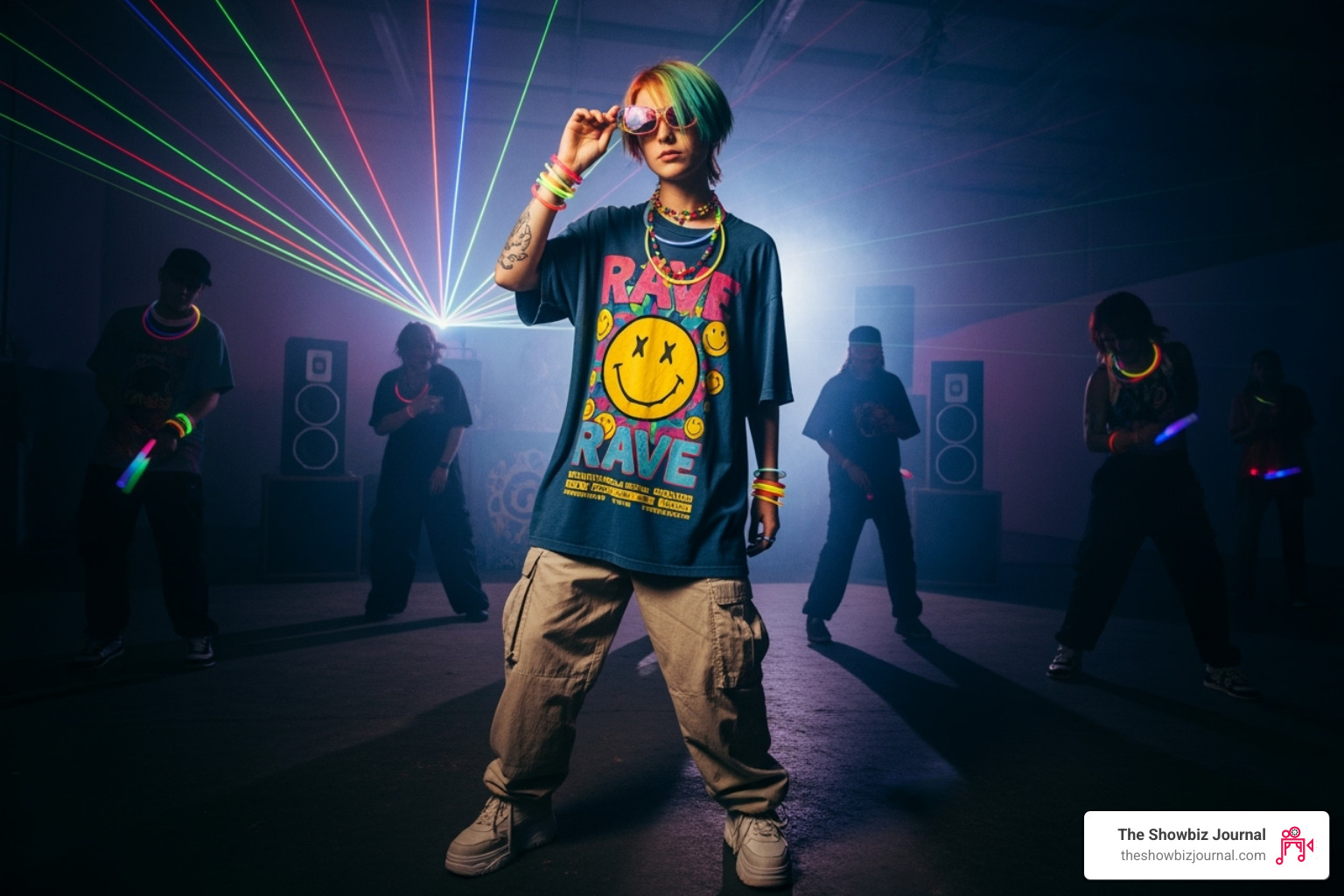
- Baggy silhouettes – Wide-leg pants, oversized shirts for comfort and movement
- Neon colors – Electric blues, hot pinks, and lime greens that glowed under blacklights
- Smiley face logos – The iconic acid house symbol representing joy and unity
- Kandi jewelry – Handmade beaded bracelets traded between ravers
- Functional accessories – Fanny packs, visors, and platform shoes built for all-night dancing
The scene exploded in the late 1980s alongside electronic dance music, with ravers creating a uniform that rejected mainstream fashion norms. From the warehouse parties near Anaheim to the desert raves outside Los Angeles, Southern California became a hotbed for this cultural revolution.
As rave culture emerged from England’s acid house movement, it carried the philosophy of PLUR – Peace, Love, Unity, and Respect. This ethos shaped every aspect of the scene, from the music to the fashion. Ravers wore bright colors and playful accessories not just to stand out under strobe lights, but to signal their membership in a community that celebrated acceptance and joy.
The DIY aesthetic was central to the movement. Ravers customized their own clothing, made their own jewelry, and created looks that were both functional and expressive. Comfort was key – these were clothes designed for dancing until sunrise, not posing for photos.
I’m Jonas Muthoni TSJ, and as someone who has covered entertainment culture and fashion trends throughout my career, I’ve witnessed how 90’s rave style continues to influence everything from Hollywood red carpets to street fashion today. The movement’s impact on modern festival wear and streetwear shows just how these underground fashion choices truly were.
The Essential 90’s Rave Style Wardrobe
Picture this: it’s 2 AM in a warehouse near Anaheim, the bass is thumping, and you’ve been dancing for hours with no plans to stop. This is where 90’s rave style truly made sense – every piece of clothing had to work as hard as you did on the dance floor.
The beauty of rave fashion wasn’t just in its bold aesthetics, though those neon colors and wild patterns certainly caught your eye under the strobe lights. It was the perfect marriage of comfort and practicality with fearless self-expression. When you’re shuffling until sunrise, your outfit becomes your dance partner.
What made this style was its DIY aesthetic and unisex appeal. There were no fashion rules – just the understanding that your clothes needed to move with you, keep you comfortable, and let your personality shine through. Function came first, but that didn’t mean sacrificing style. Instead, ravers acceptd the freedom to mix bright colors, bold patterns, and eclectic combinations that would make any fashion purist faint.
This wasn’t about impressing anyone or following trends. It was about creating a personal uniform that reflected the inclusive spirit and high-energy beats of the scene. For more insights on how these throwback trends continue to influence modern fashion, explore our throwback fashion coverage.
Bottoms: The Wider, The Better
If there’s one rule that defined 90’s rave style bottoms, it was simple: the wider, the better. We’re talking pants so baggy they could practically house a small family – and ravers wore them with pride.
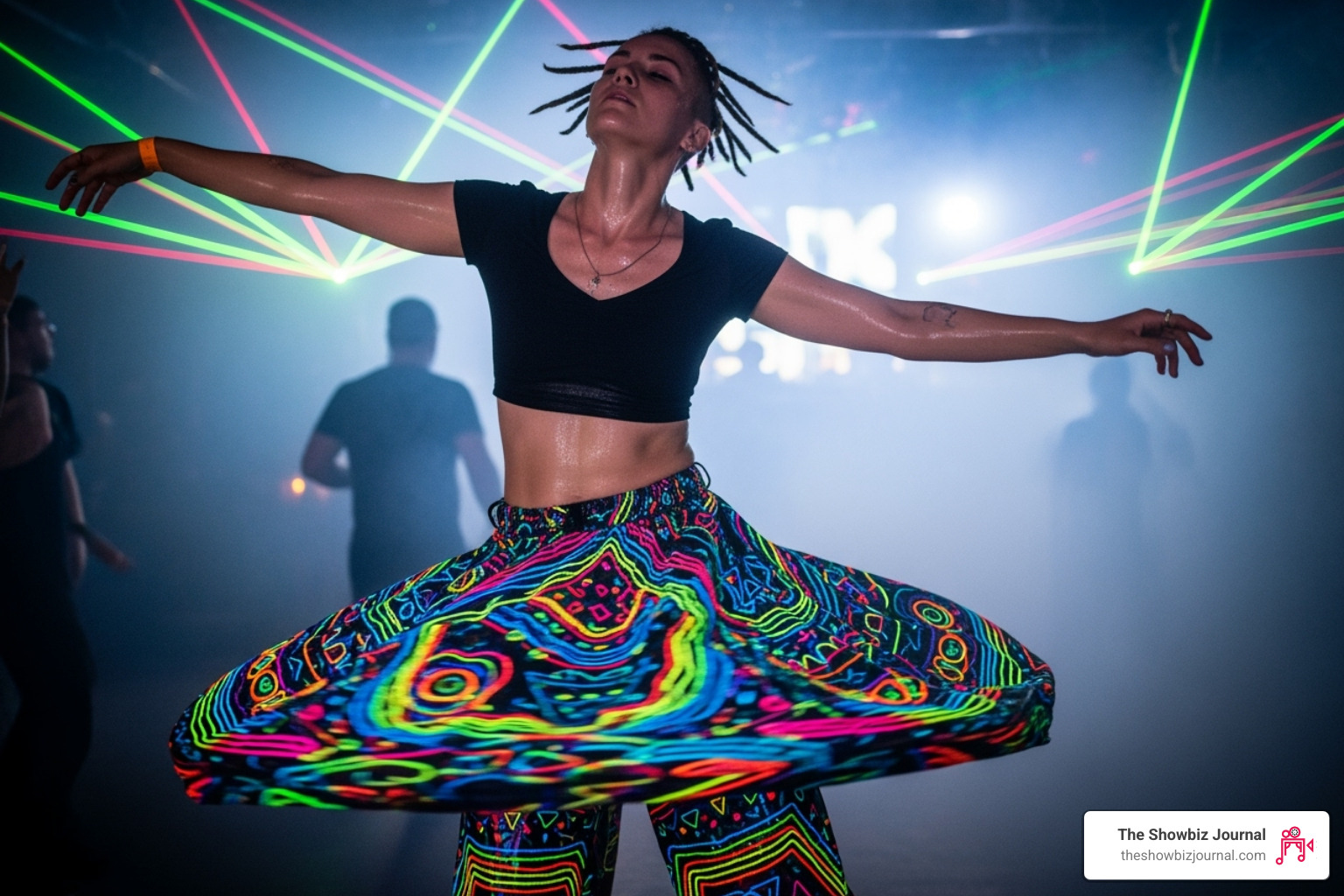
Baggy jeans were the gateway drug, but true ravers graduated to the holy grail: UFO pants. These weren’t just pants; they were portable dance floors. Cargo pants offered the practical bonus of countless pockets for your essentials, while parachute pants lived up to their name with their billowy, wind-catching silhouette.
The genius behind these voluminous bottoms went beyond comfort. They created a mesmerizing visual effect under the flashing lights, making every movement look like floating magic. As one raver put it, they could even “hide your true dancing abilities” – though honestly, when you’re having that much fun, who cares about technique?
Brands like JNCO became household names, though some in the scene preferred the more underground credibility of Gats or Kikwear. Whether you were hitting a warehouse party in our backyard of Anaheim or making the trek to a desert rave outside Los Angeles, these freedom of movement champions were absolutely essential for proper shuffling and dancing.
Tops: Bold Graphics and Bare Midriffs
The tops in 90’s rave style were walking art galleries of optimism and rebellion. The smiley face logo reigned supreme – that simple, cheerful symbol of acid house culture that somehow captured the entire spirit of the movement in one yellow circle.
But the graphic universe extended far beyond smiles. Alien graphics nodded to the otherworldly experience of electronic music, while psychedelic prints turned every raver into a walking kaleidoscope. These weren’t subtle fashion statements – they were declarations of joy rendered in the most eye-popping neon colors imaginable.
Baby-doll tees and crop tops brought a playful, carefree vibe that perfectly matched the scene’s youthful energy. Fishnet shirts added an edgy club-kid aesthetic, whether worn solo or layered over other pieces for that perfectly imperfect DIY look. When the night got chilly or you wanted to tone things down (relatively speaking), oversized sweatshirts provided comfort while serving as canvases for even more bold graphics.
The goal was beautifully simple: be bright, be comfortable, and spread positivity. It was fashion as pure self-expression, free from the constraints of mainstream style rules. Find more about the music that inspired these vibrant trends in our latest music news section.
Footwear: Chunky, Comfortable, and Ready to Dance
Your feet were your foundation in 90’s rave style, and they needed footwear that could handle anything from concrete warehouse floors in Hollywood to the dusty grounds of desert raves. This practical need birthed some of the most iconic chunky footwear in fashion history.
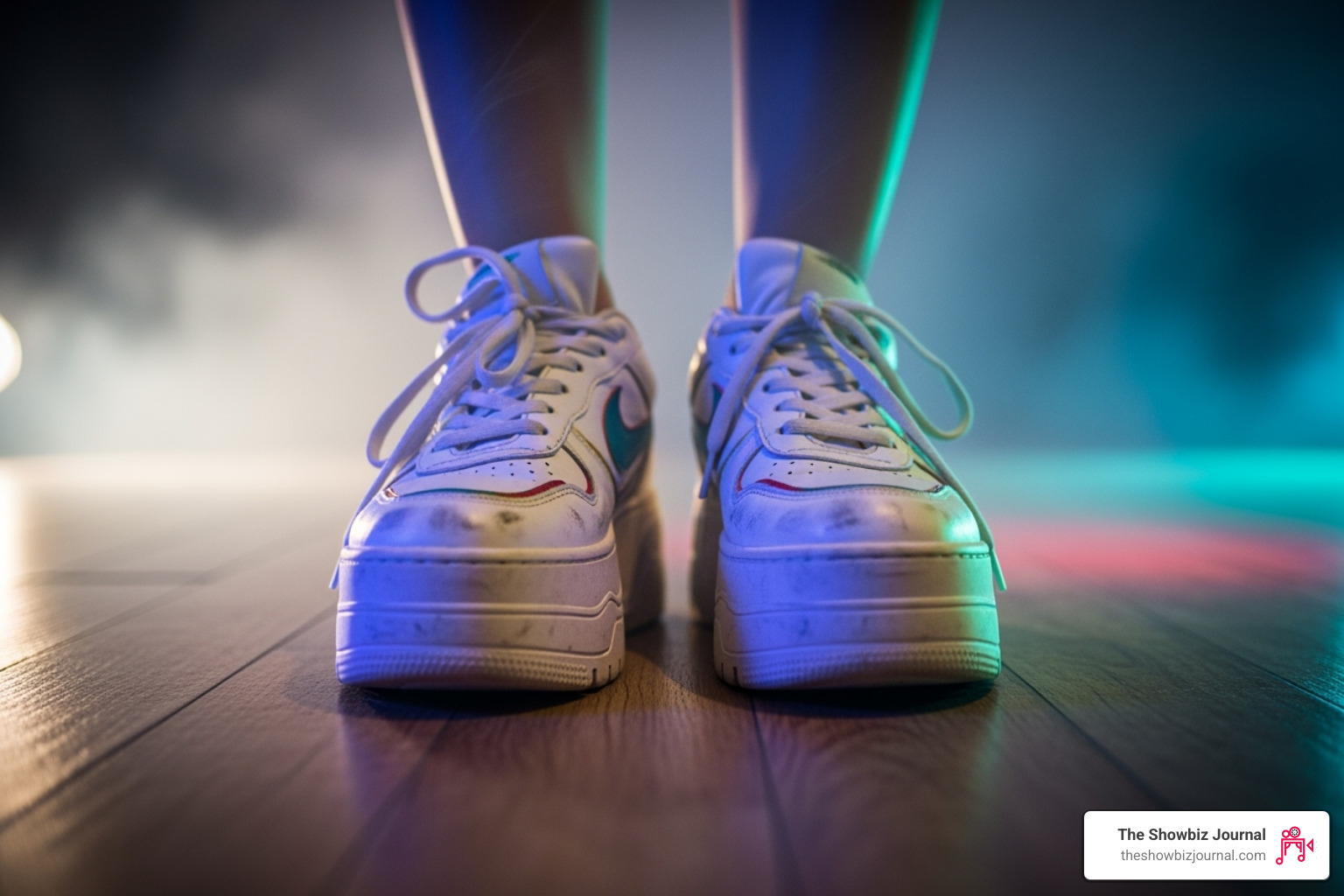
Platform sneakers were the holy grail – adding height, attitude, and that distinctive silhouette that made every step a statement. Inspired by the Spice Girls and brands like Skechers, these liftd your dance moves both literally and figuratively. Many ravers have fond memories of begging their parents for those coveted Steve Madden platform boots.
Chunky combat boots, especially Doc Martens, earned their stripes through sheer durability and comfort. These weren’t just fashion choices; they were investments in your ability to dance until dawn. Comfortable trainers rounded out the footwear trinity, chosen by ravers who prioritized pure dance performance over making a visual statement.
Whether you chose wild, statement footwear or practical dance shoes, the mission remained the same: be ready for an all-night marathon of movement, joy, and self-expression. After all, in rave culture, your shoes were your ticket to transcendence.
Accessorize to Maximize: The Finishing Touches
The magic of 90’s rave style wasn’t just in the clothes – it was in the details. Accessories transformed basic outfits into personal statements of individuality and playfulness. There was something beautifully innocent about grown adults wearing pacifiers and trading handmade bracelets, creating a world where childlike wonder mixed with underground dance culture.
These weren’t just decorative touches either. Every accessory served a purpose, whether functional or deeply meaningful to the community. The nostalgia we feel for these pieces today speaks to how perfectly they captured the spirit of an entire generation seeking connection and joy.
Kandi, Pacifiers, and Playful Jewelry
Nothing embodied the PLUR philosophy quite like Kandi bracelets. These weren’t mass-produced accessories you could buy at a store – they were lovingly crafted by hand, bead by colorful bead. Each bracelet told a story, and trading them was like sharing a piece of your soul with a fellow raver.
The ritual of friendship exchange was sacred. When you met someone who shared your vibe, you’d carefully select a Kandi piece to give them. The more bracelets covering your arms, the more connections you’d made – it was like wearing your social network. Some ravers would arrive at parties with arms bare and leave completely covered in colorful memories.
Pacifiers might seem odd to outsiders, but they served a practical purpose while adding to the playful aesthetic. Beyond their functional use, they became fashion statements worn on beaded necklaces or clipped to clothing. Chokers in plastic or beads hugged necks, while butterfly clips scattered through hair like tiny rainbow creatures.
The finishing touch? Glitter – lots of it. Faces, hair, and exposed skin sparkled under strobe lights, turning every raver into a walking disco ball.
Functional & Futuristic Headwear and Bags
Bucket hats weren’t just trendy – they were practical for outdoor desert raves around Southern California, protecting ravers from both sun and elements. The casual street vibe they added perfectly complemented the underground aesthetic that defined warehouse parties from Hollywood to Anaheim.
Colorful visors, especially those made from clear or neon plastic, served a dual purpose. They shielded eyes from intense strobe lights while adding that futuristic edge that made ravers look like they’d stepped out of a sci-fi movie. The transparent materials played beautifully with the lighting effects that were central to the rave experience.
When it came to storage, fanny packs were absolutely essential. Try dancing for eight hours straight while keeping track of your belongings – you’ll quickly understand why these became the unofficial uniform accessory. They kept hands free for dancing and trading Kandi while securing valuables close to your body.
Mini backpacks offered slightly more storage without the bulk, perfect for carrying extra water, glow sticks, or homemade Kandi to trade. Chain wallets attached to those massive wide-leg pants added both security and street credibility to the overall look.
The essential 90’s rave style accessories that completed every outfit included Kandi bracelets and necklaces, pacifiers on beaded chains, colorful visors and bucket hats, fanny packs and mini backpacks, small rectangular sunglasses, glow sticks and LED accessories like lighted gloves, chokers and beaded jewelry, butterfly clips with plenty of glitter, and arm warmers paired with fishnet gloves.
Cultural Influences: From Music to Hollywood’s Underground
The clothes that defined 90’s rave style weren’t created in a vacuum – they emerged from a powerful cultural movement that was reshaping youth identity across the globe. This wasn’t just about looking cool; it was about belonging to something bigger than yourself. The fashion became a uniform for a new generation that was actively rejecting the polished, status-driven mainstream looks of the 1980s.
In our Hollywood backyard, we witnessed how rave culture offered an alternative to the glitzy, image-obsessed entertainment industry. While the rest of LA was focused on designer labels and red carpet glamour, ravers were creating their own aesthetic rules in warehouses and underground venues. The baggy pants, neon colors, and playful accessories were a direct middle finger to the “dress to impress” mentality that dominated so much of Southern California culture.
This was fashion as rebellion, but rebellion with a smile. Where punk had been angry and grunge had been apathetic, 90’s rave style was joyfully defiant. It said, “We’re going to wear what makes us happy, what helps us dance, and what brings us together.”
The Influence of Electronic Music on 90’s Rave Style
The pounding beats of techno, the euphoric builds of trance, and the hypnotic loops of house music didn’t just fill the air at raves – they shaped what people wore on the dance floor. 90’s rave style was essentially clothing designed to move with electronic music’s unique energy and rhythm.
Think about it: when you’re dancing to repetitive beats for hours, your clothes need to flow with your body. The wide-leg pants weren’t just comfortable – they created visual trails as dancers moved, adding to the sensory experience that electronic music was trying to create. The bright neon colors and reflective materials weren’t just eye-catching – they responded to the strobe lights and blacklights that were essential to the rave atmosphere.
The iconic smiley face from acid house became more than just a logo – it was a philosophy worn on your chest. Just as the music was about collective euphoria rather than individual stardom, the fashion emphasized community over competition. Everyone looked bold and bright, but no one was trying to outshine anyone else.
From our perspective here in Hollywood, where image is everything, this was revolutionary. The music demanded authenticity, and the fashion followed suit. You couldn’t fake your way through a rave outfit – it had to be functional, it had to be genuine, and it had to help you connect with the music and the people around you. For more insights into how music continues to shape fashion today, check out our Entertainment history section.
Regional Scenes: The Southern California Vibe
While rave culture started across the pond in England, it found a perfect home in Southern California’s sprawling landscape and year-round party weather. Here in our own backyard, from the warehouses near Anaheim to the vast desert spaces outside Los Angeles, 90’s rave style took on its own distinctive West Coast flavor.
The warehouse parties that made Anaheim legendary weren’t just about the music – they were about creating temporary communities in forgotten industrial spaces. The fashion reflected this DIY spirit, with ravers customizing their outfits in ways that matched the improvised nature of the venues. Our warm California climate also meant that ravers could get away with more skin-showing crop tops and lighter fabrics than their counterparts in chillier cities.
But it was the desert raves that really defined the SoCal scene. Picture hundreds of people dancing under the stars in the Mojave, their neon outfits glowing against the vast darkness. The 90’s rave style in these settings became even more expressive and free-flowing, adapted to outdoor conditions but maintaining that essential rave aesthetic of comfort, color, and community.
The West Coast influence brought a laid-back element to rave fashion that you didn’t see everywhere. While the core elements remained – the wide pants, the bright colors, the playful accessories – there was a distinctly California ease to how people put their looks together. This legacy continues today in our festival culture, with events that still celebrate this history, like those at House of Blues Anaheim.
The Rave Revival: How 90s Style Dominates Today
Fast forward to today, and it’s impossible to ignore: 90’s rave style is having a major moment. Walk down the streets of Hollywood or check out any festival in Southern California, and you’ll see the unmistakable influence of those underground warehouse parties that once rocked Anaheim.

This revival isn’t just coincidence – it’s part of fashion’s natural cycle. What goes around comes around, and right now, the 90s are definitely having their moment again. From TikTok influencers showing off their baggy cargo pants to celebrities sporting platform sneakers on red carpets, the rave aesthetic has gone mainstream in a big way.
The nostalgia factor is huge here. Gen Z and younger millennials are drawn to an era they might not have experienced firsthand, but one that represents freedom and authentic self-expression. There’s something appealing about a time when fashion wasn’t about perfection – it was about having fun and dancing until sunrise.
Modern festivals have become the perfect playground for this revival. Events across Southern California showcase attendees mixing classic rave elements with contemporary twists. You’ll see neon colors and baggy silhouettes everywhere, but now they’re paired with modern materials and updated fits that work for today’s festival-goers.
TikTok has been a game-changer in bringing this style back. Users share tutorials on creating the perfect 90s rave look, trade vintage pieces, and show off their festival outfits that pay homage to the original scene. The DIY spirit that defined the original movement lives on through social media creativity.
The key to nailing modern 90’s rave style is balance. You don’t want to look like you’re wearing a costume from a 90s movie. Instead, try mixing one or two classic rave elements with contemporary pieces. Think a bright crop top with modern high-waisted pants, or classic platform shoes with a current graphic tee.
The DIY aesthetic remains just as important today. Customizing your look, making your own accessories, or putting together unexpected combinations is what makes the style authentic. After all, the original rave scene was never about following rules – it was about expressing yourself and having a blast doing it.
Frequently Asked Questions about 90s Rave Fashion
As someone who’s covered entertainment culture from our bases in Hollywood and Anaheim, I get tons of questions about this iconic era. The fascination with 90’s rave style never seems to fade, especially here in Southern California where so much of the scene originated. Let me answer the most common questions I hear about this fashion movement.
What is the core philosophy behind 90s rave fashion?
The heart of 90’s rave style was rebellion wrapped in rainbow colors and baggy pants. This wasn’t just about looking cool – it was a complete rejection of everything mainstream fashion represented in the late 80s and early 90s.
Think about it: while everyone else was squeezing into tight, expensive designer clothes, ravers were celebrating comfort, creativity, and community. The PLUR philosophy – Peace, Love, Unity, and Respect – wasn’t just a catchy slogan. It shaped every clothing choice, from the bright colors that welcomed everyone to the functional designs that let you dance for hours without worry.
The beauty of rave fashion was its democracy. You didn’t need money for designer labels or a perfect body for fitted clothes. All you needed was creativity, some neon fabric, and the courage to express yourself. It was fashion as freedom, pure and simple.
What are the most iconic clothing items from the 90s rave scene?
When I think of 90’s rave style, certain pieces immediately come to mind – and trust me, if you lived through the warehouse parties near Anaheim like I did, these items are burned into your memory.
Wide-leg pants were absolutely essential. We’re talking JNCO jeans, UFO pants, and cargo pants so baggy you could hide a small child in each leg. These weren’t just a style choice – they were practical magic that let you shuffle and dance all night without restriction.
Graphic tees and crop tops dominated the upper body, especially those featuring the iconic acid house smiley face. Alien graphics, psychedelic prints, and anything that glowed under blacklight were instant hits. Fishnet shirts and oversized sweatshirts rounded out the top options.
For feet, platform sneakers and chunky combat boots ruled the dance floor. Doc Martens were practically a uniform, while platform Sketchers made everyone feel like a Spice Girl. The chunkier and more comfortable, the better.
Accessories were where personality really shone through. Kandi bracelets weren’t just jewelry – they were friendship tokens traded throughout the night. Pacifiers, bucket hats, colorful visors, and fanny packs completed the look while serving real purposes in the rave environment.
How can I create a 90s rave look without looking like I’m in a costume?
This is probably the question I get most often, especially from younger fans finding 90’s rave style through TikTok and modern festivals. The key is understanding that this style was never about perfection – it was about authenticity and fun.
Start with one statement piece rather than going full-on costume. Maybe it’s a pair of wide-leg cargo pants paired with a simple fitted tee, or a neon crop top with modern high-waisted jeans. The goal is to capture the spirit, not recreate a museum exhibit.
Focus on the silhouette – the baggy, comfortable fit was central to the aesthetic. Modern brands are making updated versions of those classic wide-leg pants that feel contemporary while honoring the original vibe. Pair them with current accessories to bridge the gap between then and now.
Choose your colors wisely. You don’t need to look like a highlighter exploded on you. One bright, neon piece can carry the whole look. Maybe it’s a hot pink bucket hat or electric blue platform sneakers – let that be your pop of rave color.
The original ravers were mixing and matching whatever they could find or afford. That DIY spirit is what made the style authentic. Combine vintage pieces with modern basics, add some playful accessories, and most importantly, wear it with the confidence and joy that made 90’s rave style so special in the first place.
The best part? Here in Southern California, this style never really went away. From the streets of Hollywood to the festival grounds of Coachella, that rave spirit lives on in new forms every day.
Conclusion: More Than a Trend, A Lasting Legacy
When I think about 90’s rave style today, it’s clear this wasn’t just another fashion moment that came and went. This was a cultural revolution that fundamentally changed how we think about self-expression, community, and what fashion can represent.
The movement gave birth to something much bigger than clothing choices. It created a visual language of freedom of expression that spoke to an entire generation hungry for authenticity and connection. The community aspect was – ravers didn’t just wear similar clothes, they created a uniform that signaled belonging to something special, something inclusive where everyone was welcome regardless of background.
From those legendary warehouse parties near our Anaheim community to the epic desert gatherings outside Los Angeles, 90’s rave style became the vibrant uniform for a movement built on peace, love, unity, and respect. Here in Southern California, we witnessed how this underground scene grew into something that would influence fashion for decades to come.
The enduring impact is impossible to ignore today. Walk down any street in Hollywood, and you’ll see echoes of that original rave aesthetic – the baggy silhouettes, the bold neon colors, the playful accessories that once defined underground dance floors. High fashion designers regularly draw inspiration from this era, while streetwear brands continue to reimagine those iconic wide-leg pants and platform sneakers.
What makes this legacy so powerful is how it reminds us that fashion can be a tool for building community and spreading joy. The DIY spirit of customizing Kandi bracelets and personalizing outfits showed that style doesn’t have to come from expensive brands – it can come from creativity and heart.
As we continue covering the changing world of entertainment and fashion here at The Showbiz Journal, 90’s rave style stands as a perfect example of how underground movements can reshape mainstream culture. The cyclical nature of fashion ensures these bold, joyful aesthetics will keep inspiring new generations who find the power of dressing for freedom, fun, and community.
Explore more 90s trends in our Lifestyle section to see how this incredible era continues to influence today’s pop culture landscape.

About the author
Annelise Sylta
Annelise Sylta is a member of the editorial staff at The Showbiz Journal. She holds an MBA from FIDM and brings a professional background in marketing, communications, branding, and audience engagement to her work with the publication. Her experience provides an additional perspective on the intersection of entertainment, culture, media, and contemporary lifestyle.